About 480 minutes
Nests and Eggs of Birds of the United States Illustrated — Reading Companion
Birds
110,393 recorded words. 24 minutes difference from this book's estimate.
View Gutenberg source #45063
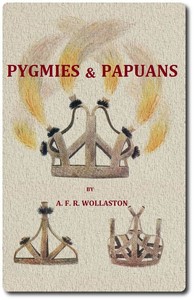
Pygmies & Papuans: The Stone Age To-day in Dutch New Guinea — Story, Setting & Ideas can be approached with a clearer sense of reading commitment from its source measurements: 104,835 words, 7 hr 36 min estimated reading time, and 16 detected text sections.
The text analysis averages about 27.3 words per sentence, while the detected sections provide another way to judge how the source is divided.
Project Gutenberg metadata also associates the work with “British Ornithologists' Union Expedition -- 1909-1911,” connecting these edition facts with the source record’s subject description.
Explore this collection
These alternatives are selected using recorded categories and estimated reading time.
About 480 minutes
Birds
110,393 recorded words. 24 minutes difference from this book's estimate.
View Gutenberg source #45063About 387 minutes
Birds
88,975 recorded words. 69 minutes difference from this book's estimate.
View Gutenberg source #34376About 554 minutes
Birds
127,301 recorded words. 98 minutes difference from this book's estimate.
View Gutenberg source #62793Search stored excerpts and compare books → Choose by your preferences →
Choices use stored catalog measurements. Estimates vary with reading speed. A shared category is a catalog label, not a claim that two books have the same argument or literary quality.
Search reads excerpt text stored with this catalog and links to its associated Gutenberg record. The connection is stored in the site database; this tool does not recheck that every excerpt is word-for-word identical to that external record. Excerpt search does not cover every chapter and does not verify historical publication dates.
Catalog snapshot checked: 2026-09-25. Coverage: 100 public books, 100 available source excerpts.
Read the complete public-domain text at its original source.
Read on Project GutenbergWollaston opens his account of the 1909–1911 British Ornithologists' Union expedition to Dutch New Guinea with a defensive preface, quoting a seventeenth-century navigator who anticipated complaints that his descriptions were 'dry and jejune.' This self-conscious framing sets the tone for a narrative that prioritizes precise observation over rhetorical flourish. The book's subtitle, 'The Stone Age To-day,' signals the author's conviction that the native peoples encountered were living in a state of extreme primitiveness—a claim that shapes both the scientific and popular appeal of the work.
One of the most striking features of Wollaston's narrative is his attention to the fluid geography of the region. He describes rivers that 'overflow in convenient directions' and establish connections between one another, noting that the Wataikwa changed course significantly within a few months. The rivers near the sea break into 'an extraordinary network of branches,' and the entire lowland plain appears to be in constant flux. This instability directly affected the expedition's progress: crossing the Wataikwa was often impossible, and the track-cutting parties faced not only dense jungle but also the risk of being swept away. Wollaston's observations suggest a landscape that resists human mapping and control, a theme that recurs throughout the text.
The physical effort required to move through the interior is a central concern. Wollaston records that Rawling and Marshall, with three Gurkhas and five natives, spent three weeks cutting five thousand yards of track—a rate of less than 250 yards per day. The entire five-mile path took five weeks, and even then it proved too difficult for laden men. The jungle itself is described as composed of 'peculiarly hard wood' trees growing so close together that it was 'quite impossible to push your way between them.' The constant wetting from river crossings, the mud, and the leeches are presented as routine hardships. These details ground the narrative in the material realities of exploration, where progress is measured in yards per day and every mile comes at a cost.
The pygmy peoples are introduced as 'one of the most primitive peoples now in existence,' a characterization that reflects the evolutionary framework of early twentieth-century anthropology. Wollaston's descriptions are filtered through the lens of the expedition's scientific aims, yet the text also records moments of direct interaction. The frontispiece shows a 'Tapiro Pygmy,' and the narrative includes observations of their material culture and daily life. However, the excerpts provided do not reveal sustained ethnographic detail; the focus remains on the expedition's own activities. Readers should note that the appendices by Haddon, Ogilvie-Grant, and Ray—covering ethnology, ornithology, and linguistics—likely contain the more systematic data, while Wollaston's main text offers a personal, often arduous, travelogue.
Wollaston's narrative is best approached as a record of the practical challenges of early twentieth-century field science in a region that was then largely unknown. The book's value lies not in dramatic adventure but in its detailed observations of landscape, labor, and the logistics of exploration. Readers interested in the ethnography or ornithology should consult the appendices, which contain the specialized contributions of the expedition's experts.
I keep thinking about that old expedition book, the way Wollaston described the mud and the quiet patience of those encounters—how much went unspoken between people who couldn't share a language. It made me feel small in a good way. That same gentle wonder came back reading Migration of Birds (1950) — Background and Themes. Some journeys aren't about arriving, just the steady rhythm of going, and that stayed with me.
Use these questions to collect your thoughts before moving on.