About 268 minutes
Extinct birds — Context and Discussion
Birds
61,553 recorded words. 9 minutes difference from this book's estimate.
View Gutenberg source #40000
The source record for Little Brothers of the Air — Story, Setting & Ideas measures this digital text at 63,648 words, 4 hr 37 min estimated reading time, and 9 detected text sections.
The text analysis averages about 22.4 words per sentence, while the detected sections provide another way to judge how the source is divided.
Project Gutenberg metadata also associates the work with “Birds,” connecting these edition facts with the source record’s subject description.
Explore this collection
These alternatives are selected using recorded categories and estimated reading time.
About 268 minutes
Birds
61,553 recorded words. 9 minutes difference from this book's estimate.
View Gutenberg source #40000About 258 minutes
Birds
59,208 recorded words. 19 minutes difference from this book's estimate.
View Gutenberg source #25292About 297 minutes
Birds
68,260 recorded words. 20 minutes difference from this book's estimate.
View Gutenberg source #47115Search stored excerpts and compare books → Choose by your preferences →
Choices use stored catalog measurements. Estimates vary with reading speed. A shared category is a catalog label, not a claim that two books have the same argument or literary quality.
Search reads excerpt text stored with this catalog and links to its associated Gutenberg record. The connection is stored in the site database; this tool does not recheck that every excerpt is word-for-word identical to that external record. Excerpt search does not cover every chapter and does not verify historical publication dates.
Catalog snapshot checked: 2026-09-25. Coverage: 100 public books, 100 available source excerpts.
Read the complete public-domain text at its original source.
Read on Project GutenbergMiller opens not with a thesis but with a specific moment: a bobolink's song that reproduces the wood-thrush's organ-like quality. This attention to acoustic detail sets the tone for a book built from field notes, not generalities. The narrative voice shifts between eager curiosity and wry self-deprecation—she admits to being teased by a host who finds a bobolink nest after she unknowingly picked its marker flowers. Such episodes reveal a writer who treats birds as individuals and herself as a fallible witness.
The book's structure follows two landscapes: the Great South Bay and the Black River Country. Each chapter zeroes in on a single species or encounter, yet Miller resists tidy conclusions. She ends a bobolink passage wondering about the singer's domestic life, leaving questions open. This restraint, paired with vivid sensory reporting, makes the work feel like a naturalist's journal rather than a textbook.
Miller's prose is conversational but precise. She describes a bobolink's song as “the most bewitching rhapsody” and notes that its first three notes “were an exact reproduction of the wood-thrush's (though more rapidly sung).” This ear for mimicry and tempo is characteristic: she listens for variations, not just identification. Her own voice is equally distinctive. When a host calls her wildflower bouquet “that stuff,” she records her relief that he did not value the flowers—only the nest they concealed. The humor is gentle, self-aware, and never condescending.
She also admits ignorance freely. After a morning of bobolink song, she writes, “How much I 'wanted to know'! How I should like to see the nests and the nestlings!” This open-ended wonder shapes the book's pacing. Miller does not rush to answer every question; she lets some hang, trusting that the reader shares her curiosity. The result is a narrative that feels unhurried, even meditative, yet never slack.
The book's two-part geography—coastal Long Island and inland New York—creates a natural rhythm. Chapters in the first half tend to focus on single nests or fledglings (kingbirds, flickers, bluejays), while the second half includes more comparative surveys, such as “A June Round of Calls” and “From My Window.” This shift from tight focus to broader sweep mirrors the nesting season's own arc: intense observation during breeding, then a wider gaze as birds disperse.
Miller also varies pace within chapters. A typical passage might begin with a leisurely description of setting, tighten into a moment of discovery (a nest, a song), then pull back to reflection. In the bobolink chapter, she moves from a general search to a specific discovery guided by a dead twig, then to the emotional payoff of seeing the nestlings. The rhythm feels organic, not formulaic. She knows when to linger and when to move on.
Certain motifs recur: the use of landmarks (elm trees, dead twigs), the frustration of ground nests hidden in grass, and the interplay between human expectation and bird behavior. Miller notes that her host's “statements were apt to be somewhat embellished by his vivid imagination,” yet he finds the nest. This tension between skepticism and trust in others' reports runs through the book. She also returns to the problem of naming: each chapter header gives both common and scientific names, but the text itself uses colloquial terms like “bobolink” and “veery,” grounding the science in everyday language.
Small physical details accumulate: the “fairy-like fringe” of a flower's petals, the “cosy cup” of a nest, the way a bird “sailed out from behind the daisies.” These are not decorative; they are evidence of a method. Miller looks closely at what others might overlook, and she trusts that such details matter. The book's authority comes not from expertise but from attention.
Readers will find that Miller's greatest strength is her willingness to be surprised. She does not pretend to know everything, and she does not force her observations into neat categories. The book rewards those who read slowly, as she watched: with patience, a notebook, and an ear for the unexpected note. Let the chapters stand as individual excursions; the cumulative effect is a portrait of a naturalist learning to see, and to write, without hurry.
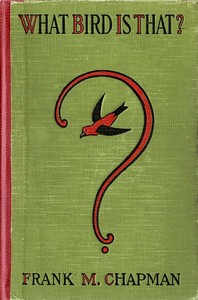
I remember Olive Thorne Miller watching those kingbirds, her notebook filling with patient strokes while they fed their young. That same gentle seeking lives on in What bird is that? — A Reader’s Guide, a quieter sort of companion for when the morning light asks a simple question. Both books hold the same unhurried wonder, like friends sharing a window.
Create a short personal record of your experience with this book.