About 579 minutes
A Synopsis of the Birds of North America — Themes and Context
Birds
132,941 recorded words. 25 minutes difference from this book's estimate.
View Gutenberg source #42832
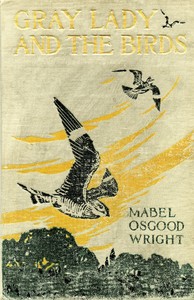
Before opening Gray Lady and the Birds: Stories of the Bird Year for Home and School — A Closer Reading, the edition data offers a quick orientation: 127,301 words, 9 hr 14 min estimated reading time, and 18 detected text sections.
The text analysis averages about 28.0 words per sentence, while the detected sections provide another way to judge how the source is divided.
Project Gutenberg metadata also associates the work with “Birds -- Juvenile literature,” connecting these edition facts with the source record’s subject description.
Explore this collection
These alternatives are selected using recorded categories and estimated reading time.
About 579 minutes
Birds
132,941 recorded words. 25 minutes difference from this book's estimate.
View Gutenberg source #42832About 480 minutes
Birds
110,393 recorded words. 74 minutes difference from this book's estimate.
View Gutenberg source #45063About 456 minutes
Birds
104,835 recorded words. 98 minutes difference from this book's estimate.
View Gutenberg source #53384Search stored excerpts and compare books → Choose by your preferences →
Choices use stored catalog measurements. Estimates vary with reading speed. A shared category is a catalog label, not a claim that two books have the same argument or literary quality.
Search reads excerpt text stored with this catalog and links to its associated Gutenberg record. The connection is stored in the site database; this tool does not recheck that every excerpt is word-for-word identical to that external record. Excerpt search does not cover every chapter and does not verify historical publication dates.
Catalog snapshot checked: 2026-09-25. Coverage: 100 public books, 100 available source excerpts.
Read the complete public-domain text at its original source.
Read on Project GutenbergGray Lady and the Birds opens with a poem by Dora Read Goodale and a quotation from Theodore Roosevelt warning against “stories that are false to nature.” The book’s structure is unusual: it presents itself as a series of stories for home and school, yet the excerpts reveal extended, fact-filled monologues on bird identification, diet, and migration. The narrative voice—Gray Lady—addresses children directly, but the density of ornithological detail suggests the author expected adult guidance or a patient young reader.
The catalog lists this as juvenile literature, and the title page calls it “Stories of the Bird Year for Home and School.” Yet the excerpts show long passages that read more like a field guide than a story. In the chapter on game-birds, Gray Lady describes the Meadowlark’s appearance, song, diet, and legal status across multiple states. The fictional elements—the Gray Lady character and the children Tommy and others—appear only briefly, serving as prompts for the natural history lessons. The book’s dedication to William Dutcher, president of the National Association of Audubon Societies, signals its conservation mission, which is woven into the factual material rather than the plot.
Wright uses precise physical and behavioral details to make her case for bird protection. The Meadowlark is described as having “a rather flat head and long, stout bill, its back speckled and streaked with brown and black, and a beautiful yellow throat and breast crossed by a crescent of black.” She then lists the insects it eats—“grasshoppers, cutworms, sow-bugs, ticks, weevils, plant-lice, and the click-beetle”—to argue for its economic value. The book explicitly names states where the Meadowlark is still hunted and urges readers to “beg them to tell every one of this and the Prairie Lark’s merits.” This blend of field identification and political advocacy is a distinctive feature of the text.
The narrative voice shifts between direct address to children and more formal exposition. Gray Lady says, “You, children, who live with green fields about you, all know the Meadowlark by sight and sound, even if you never have had the curiosity to learn its name.” But the vocabulary and sentence complexity—such as “the white feathers at the outside of the tail show plainly, and name it Meadowlark, just as the white rump names the Flicker”—suggest an audience comfortable with compound sentences and technical terms. The book also includes a poem and a presidential quotation, indicating a dual readership of children and the adults teaching them.
Readers should approach Gray Lady and the Birds as a hybrid work: part nature narrative, part conservation pamphlet, part identification manual. The fictional frame is thin, but the factual content is dense and carefully sourced. The book rewards those who read it for its specific observations of New England bird life and its early twentieth-century arguments for protection. The excerpts do not reveal the full seasonal structure promised by the subtitle, so the complete work may offer more narrative continuity than these passages suggest.
Gray Lady’s quiet way of noticing birds—their habits, their worries—stayed with me long after I closed it. It felt less like a lesson and more like sitting on a porch, watching. That same gentle presence touches My Robin — Reading Companion, a softer glimpse into one bird’s life, as if the seasons themselves learned to whisper. I still think about that old gray figure sometimes.
A brief reflection can help important ideas stay with you longer.