About 240 minutes
Beautiful Birds — Background and Themes
Birds
55,113 recorded words. 5 minutes difference from this book's estimate.
View Gutenberg source #50777
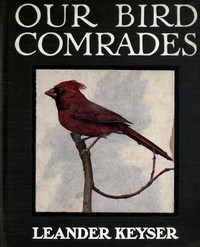
The catalog record for Our Bird Comrades — Context and Discussion provides practical reading context through 54,032 words, 3 hr 55 min estimated reading time, and 6 detected text sections.
The text analysis averages about 26.2 words per sentence, while the detected sections provide another way to judge how the source is divided.
Project Gutenberg metadata also associates the work with “Birds,” connecting these edition facts with the source record’s subject description.
Explore this collection
These alternatives are selected using recorded categories and estimated reading time.
About 240 minutes
Birds
55,113 recorded words. 5 minutes difference from this book's estimate.
View Gutenberg source #50777About 228 minutes
Birds
52,387 recorded words. 7 minutes difference from this book's estimate.
View Gutenberg source #27285About 221 minutes
Birds
50,780 recorded words. 14 minutes difference from this book's estimate.
View Gutenberg source #49780Search stored excerpts and compare books → Choose by your preferences →
Choices use stored catalog measurements. Estimates vary with reading speed. A shared category is a catalog label, not a claim that two books have the same argument or literary quality.
Search reads excerpt text stored with this catalog and links to its associated Gutenberg record. The connection is stored in the site database; this tool does not recheck that every excerpt is word-for-word identical to that external record. Excerpt search does not cover every chapter and does not verify historical publication dates.
Catalog snapshot checked: 2026-09-25. Coverage: 100 public books, 100 available source excerpts.
Read the complete public-domain text at its original source.
Read on Project GutenbergLeander S. Keyser opens Our Bird Comrades with a direct appeal: to know birds intimately, one must get close to them. He frames the book as a collection of concrete observations gathered at personal cost, not a dry technical manual. The author’s voice is that of an enthusiast who values example over precept—an ounce of example, he says, is worth a pound of precept. The dedication sets the tone: “To all who love the birds for their own sakes,” urging study with the glass and without the gun. This is a field companion, not a classroom text.
Keyser’s approach is methodical but warm. He insists on veracity: all stories are “true bird stories,” and every species mentioned has a determined status in the avian system. Yet he avoids technical overload, aiming for scientific accuracy without jargon. The opening chapter, “Beginning the Study,” encourages readers to use their eyes and ears, offering his own research as a model. He notes that many chapters first appeared in periodicals, giving the book a serialized, anecdotal feel. The author’s goal is not to catalog every bird but to show how much can be gleaned by patient watching.
One of the most striking passages describes a white-breasted nuthatch wedging live ants into bark crevices. Keyser watched the bird “hitching up and down” a sapling, thrusting something into fissures. Upon inspection, he found ants “doubled up into a bow or an angle,” still wiggling their legs, apparently stored for later. The author does not claim certainty—he asks, “Does it not look as if the forehanded nuthatch was laying by a supply of ants?”—but the detail is vivid and specific. Elsewhere, he recounts wood pewees catching gnats midair, the snap of their mandibles audible, and feeding young without alighting. These are not generic observations; they are moments of discovery.
Keyser’s prose is direct and personal. He uses phrases like “I have already told you something about him” and “my curiosity led me to pry into the bird’s affairs,” creating a sense of shared exploration. The book is organized by species and topic—chapters on chickadees, nuthatches, cowbirds, blue jays—but also includes sections like “Happenings by the Way” and “Odds and Ends,” which gather miscellaneous field notes. This structure mirrors the naturalist’s practice: systematic but open to serendipity. The author frequently cites other ornithologists, such as Elliott Coues, grounding his work in a broader scientific conversation.
The provided excerpts cover only the introduction, table of contents, and a few sample chapters. We see Keyser’s method and some notable anecdotes, but the full scope of the book—including chapters on the alpine rosy finch, the blue jay as “cannibal,” and bird education—remains unexamined. The author’s claim that all stories are true cannot be verified from these snippets, nor can we assess how he handles more controversial topics like the cowbird’s parasitism. Readers should approach the book as a series of field reports, not a comprehensive guide. Keyser himself acknowledges that a full monograph library would be needed for all species.
Keyser’s Our Bird Comrades rewards readers who share his patience and curiosity. The book is best read not as a reference but as a companion in the field—one that models how to watch, question, and record. The author’s enthusiasm is infectious, but his humility about what he does not know is equally instructive. For those willing to look closely, the book offers a template for turning casual observation into genuine discovery.
There are mornings I still think of Keyser’s nuthatch, tucking ants into bark like a quiet secret. His glass, not the gun, taught me patience. I find the same gentle reverence in Beautiful Birds — Background and Themes — a companion for those who watch, wait, and remember what the pewees taught us mid-flight.
Capture what you thought, learned, and would like to remember.