About 235 minutes
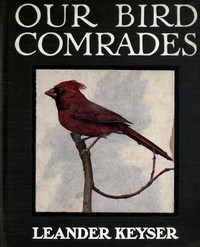
Our Bird Comrades — Context and Discussion
Birds
54,032 recorded words. 7 minutes difference from this book's estimate.
View Gutenberg source #26346
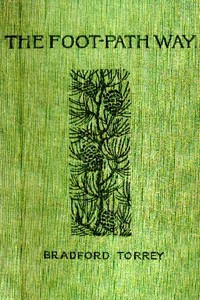
The source record for The Foot-path Way — Context and Discussion measures this digital text at 52,387 words, 3 hr 48 min estimated reading time, and 7 detected text sections.
The text analysis averages about 21.5 words per sentence, while the detected sections provide another way to judge how the source is divided.
Project Gutenberg metadata also associates the work with “Birds,” connecting these edition facts with the source record’s subject description.
Explore this collection
These alternatives are selected using recorded categories and estimated reading time.
About 235 minutes
Birds
54,032 recorded words. 7 minutes difference from this book's estimate.
View Gutenberg source #26346About 221 minutes
Birds
50,780 recorded words. 7 minutes difference from this book's estimate.
View Gutenberg source #49780About 216 minutes
Birds
49,629 recorded words. 12 minutes difference from this book's estimate.
View Gutenberg source #25600Search stored excerpts and compare books → Choose by your preferences →
Choices use stored catalog measurements. Estimates vary with reading speed. A shared category is a catalog label, not a claim that two books have the same argument or literary quality.
Search reads excerpt text stored with this catalog and links to its associated Gutenberg record. The connection is stored in the site database; this tool does not recheck that every excerpt is word-for-word identical to that external record. Excerpt search does not cover every chapter and does not verify historical publication dates.
Catalog snapshot checked: 2026-09-25. Coverage: 100 public books, 100 available source excerpts.
Read the complete public-domain text at its original source.
Read on Project GutenbergBradford Torrey's The Foot-path Way (1892) opens with a June scene in Franconia, New Hampshire, where the author and a small party of summer boarders—including an entomologist and a newspaper proprietor—devote themselves to moth collecting. The narrative voice is wry and self-deprecating: Torrey describes his own meager catch as a "beautiful Io" marred by a finger-mark, and notes that the hotel piazza is lit until midnight with lamps and lanterns while nets wave about. This blend of amateur naturalism and social observation sets the tone for a collection that is as much about the character of the observer as about the birds and landscapes he describes.
The longest sustained observation in the excerpts concerns a female ruby-throated hummingbird and her two young. Torrey tracks the feeding behavior over eight weeks, noting a shift from regurgitation to direct beak-to-beak transfer as the nestlings age. He is careful to qualify his inferences: "we did not see the food in its passage from one bird to the other,—human eyesight would hardly be equal to work of such nicety." The account is punctuated by specific dates (June 28, August 1) and references to published ornithological notes in The Auk, grounding the narrative in contemporary scientific practice. Torrey also remarks on the father bird's absence, which he tentatively attributes to a general habit of male ruby-throats, promising to discuss the point in a later paper.
Torrey's companions are not merely background figures. The entomologist is described as "in excellent repute among the savants of Europe and America" and also known as a writer of stories; the doctor of laws is a newspaper proprietor, author, and art connoisseur. Their shared pursuit of moths—with nets dangling from the carriage and cyanide bottles on the closed piano by day—is portrayed with affectionate humor. Torrey himself plays at helping, but his role is that of an amused participant rather than a dedicated collector. This social framing distinguishes The Foot-path Way from a solitary field journal; the essays are as much about the human interactions that accompany outdoor life as about the natural phenomena themselves.
The book's table of contents lists twelve essays, ranging from "June in Franconia" to "In Praise of the Weymouth Pine." The excerpts show a prose style that is precise yet conversational, with occasional literary allusions—Milton's Paradise Lost and Shakespeare's The Winter's Tale appear in the opening pages. Torrey uses footnotes to cite ornithological sources, indicating a readership interested in both science and belles lettres. The narrative voice is consistently modest: he admits to uncertainty about the sex of the young hummingbirds and acknowledges the limits of his observation. This combination of careful detail, self-awareness, and a light social touch suggests a work aimed at the general reader who enjoys nature writing that does not oversimplify or sentimentalize.
Readers approaching The Foot-path Way should expect a series of linked essays rather than a continuous narrative. The excerpts suggest that Torrey's primary interest lies in the process of watching—the patience required, the small discoveries, and the inevitable gaps in knowledge. The book rewards those who read for the texture of the observations and the quiet humor of the observer, rather than for dramatic events or sweeping conclusions.
Some afternoons I still think of Torrey’s hummingbirds, how he watched them not to classify but to simply be near. That patient, unhurried attention feels rarer now. It’s why I keep a copy of The Breeding Birds of Kansas — Themes and Context nearby, a different landscape, same quiet way of noticing what moves and sings.
Use these questions to collect your thoughts before moving on.