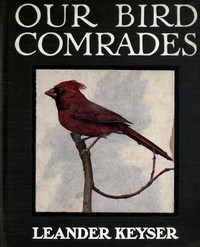
About 235 minutes
Our Bird Comrades — Context and Discussion
Birds
54,032 recorded words. 5 minutes difference from this book's estimate.
View Gutenberg source #26346
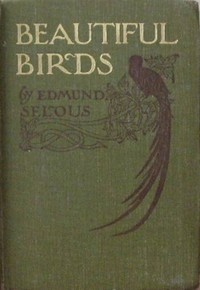
This digital edition of Beautiful Birds — Background and Themes is described by source-level measurements including 55,113 words, 4 hr estimated reading time, and 5 detected text sections.
The text analysis averages about 28.1 words per sentence, while the detected sections provide another way to judge how the source is divided.
Project Gutenberg metadata also associates the work with “Birds -- Juvenile literature,” connecting these edition facts with the source record’s subject description.
Explore this collection
These alternatives are selected using recorded categories and estimated reading time.
About 235 minutes
Birds
54,032 recorded words. 5 minutes difference from this book's estimate.
View Gutenberg source #26346About 228 minutes
Birds
52,387 recorded words. 12 minutes difference from this book's estimate.
View Gutenberg source #27285About 253 minutes
Birds
58,056 recorded words. 13 minutes difference from this book's estimate.
View Gutenberg source #34781Search stored excerpts and compare books → Choose by your preferences →
Choices use stored catalog measurements. Estimates vary with reading speed. A shared category is a catalog label, not a claim that two books have the same argument or literary quality.
Search reads excerpt text stored with this catalog and links to its associated Gutenberg record. The connection is stored in the site database; this tool does not recheck that every excerpt is word-for-word identical to that external record. Excerpt search does not cover every chapter and does not verify historical publication dates.
Catalog snapshot checked: 2026-09-25. Coverage: 100 public books, 100 available source excerpts.
Read the complete public-domain text at its original source.
Read on Project GutenbergEdmund Selous opens Beautiful Birds with a direct, conversational address to the reader, asking, “What beautiful things birds are!” and immediately setting up a competition between birds and butterflies. The prose is lively and sensory, as when he describes a kingfisher as “a little live chip of the blue sky” that “comes gleaming and gleaming along” like “a sapphire sunbeam.” This blend of precise observation and poetic metaphor characterizes Selous’s authorial voice throughout.
The book, published in 1901 and illustrated by Hubert D. Astley, is aimed at a juvenile audience but does not condescend. Selous assumes his readers can follow extended similes and complex sentences, as when he compares the inside of a tropical flower to “the open mouths of fierce dragons shooting out a lot of fiery-orange tongues.” The language is rich, playful, and occasionally surreal, making the natural world feel both wondrous and strange.
Selous begins Chapter I by directly engaging his reader: “What beautiful things birds are! Can you think of any other creatures that are quite so beautiful?” He anticipates the answer “Butterflies” and then argues for birds’ superiority through a detailed, sensory comparison. The kingfisher is described as a “little live chip of the blue sky,” while butterflies are “much smaller chip[s]” that do not “shine in the sun in such a wonderful way.” This opening establishes a pattern of direct address, rhetorical questions, and vivid imagery that persists throughout the excerpt.
The author’s voice is intimate and enthusiastic, as if he is speaking to a child sitting beside him. He uses second-person pronouns (“you,” “your”) and invites the reader to imagine a scene: “supposing you were sitting there too, amongst the daisies and buttercups in the bright summer sunshine.” This technique creates a shared imaginative space, making the natural history feel personal and immediate.
In a later passage, Selous turns from birds to the flowers of tropical forests, describing them with a cascade of surreal metaphors. He writes of flowers that look like “bunches of little pink ox-horns,” others that seem to be “very beautiful butterflies just changing into flowers,” and some that are “only white, but so lovely that all the flowers of all the colours that there are, gaze at them and envy them.” The language is deliberately extravagant, piling simile upon simile.
Selous’s descriptions often blur the line between the natural and the artificial: leaves are compared to “the pattern of a very beautiful Turkey carpet,” and flowers are said to have “tried all the colours that there are, and then found out new ones to be of.” This anthropomorphic and decorative vocabulary reflects the author’s interest in beauty as a subjective, almost magical quality. The prose is not merely informative but aims to evoke wonder and delight.
The book’s structure is straightforward: chapters are organized by bird group (Birds of Paradise, Humming-Birds, etc.), but the narrative voice is anything but dry. Selous frequently interrupts description with exclamations, questions, and asides. For example, after describing a flower’s “wonderful-looking” tail, he adds, “Such a wonderful-looking flower!” This enthusiasm is consistent and suggests a writer who is genuinely captivated by his subject.
Selous also uses repetition for effect: “look and look at it all the time it was coming, and look and look after it all the time it was going away.” The rhythm of the prose mirrors the act of watching, drawing the reader into the moment. The author’s choice to address children directly, without simplifying his vocabulary or syntax, implies a respect for his audience’s intelligence and curiosity.
Hubert D. Astley’s illustrations are an integral part of the book, as indicated by the list of plates that includes the Lyre-Bird frontispiece and images of Birds of Paradise, Humming-Birds, and other species. The text often describes visual details that would be complemented by these drawings: the “gleaming” kingfisher, the “fiery-orange tongues” of flowers, the “soft, lovely green” of palm leaves.
Selous’s verbal imagery is highly visual, and the illustrations likely served to anchor his more fantastical descriptions in recognizable forms. The collaboration between author and illustrator creates a multimodal experience: Astley’s precise line work and Selous’s vivid prose together convey both scientific accuracy and aesthetic appreciation. The book thus functions as both a natural history guide and a work of art in its own right.
Readers approaching Beautiful Birds should expect a text that prioritizes wonder over taxonomy. Selous’s language is ornate and playful, inviting the reader to see birds and flowers as sources of endless fascination. The book rewards slow reading, allowing the imagery to unfold. Astley’s illustrations provide a visual anchor for the verbal flights, grounding the fantasy in observable reality. This is a work that celebrates the natural world through the lens of human imagination.
I remember Selous’s Beautiful Birds most for its dreaming prose, how he saw tropics in a sparrow’s wing. That same patient wonder lives in this older neighbor, Reptiles and Birds A Popular Account of Their Various Orders, With a Description of the Habits and Economy of the Most Interesting — Context and Discussion, a quieter, drier hand, yet both seem to whisper from the same shaded shelf.
A brief reflection can help important ideas stay with you longer.