About 216 minutes
Bird Stories — Background and Themes
Birds
49,629 recorded words. 5 minutes difference from this book's estimate.
View Gutenberg source #25600
The catalog record for Tales of the birds — A Closer Reading provides practical reading context through 50,780 words, 3 hr 41 min estimated reading time, and 5 detected text sections.
The text analysis averages about 22.8 words per sentence, while the detected sections provide another way to judge how the source is divided.
Project Gutenberg metadata also associates the work with “Birds,” connecting these edition facts with the source record’s subject description.
Explore this collection
These alternatives are selected using recorded categories and estimated reading time.
About 216 minutes
Birds
49,629 recorded words. 5 minutes difference from this book's estimate.
View Gutenberg source #25600About 216 minutes
Birds
49,551 recorded words. 5 minutes difference from this book's estimate.
View Gutenberg source #50276About 228 minutes
Birds
52,387 recorded words. 7 minutes difference from this book's estimate.
View Gutenberg source #27285Search stored excerpts and compare books → Choose by your preferences →
Choices use stored catalog measurements. Estimates vary with reading speed. A shared category is a catalog label, not a claim that two books have the same argument or literary quality.
Search reads excerpt text stored with this catalog and links to its associated Gutenberg record. The connection is stored in the site database; this tool does not recheck that every excerpt is word-for-word identical to that external record. Excerpt search does not cover every chapter and does not verify historical publication dates.
Catalog snapshot checked: 2026-09-25. Coverage: 100 public books, 100 available source excerpts.
Read the complete public-domain text at its original source.
Read on Project GutenbergThe book opens not with a story but with a precise landscape: a quiet bit of land where two midland counties meet, a winter resort of fieldfares. The prose is unhurried, noting hips, hawthorn berries, pasture-meadows, and a snake-like stream hidden by briar and bramble. The narrator invites you to sit on an elm bole and watch shy birds in solitude. This is not a field guide but a framed narrative—the first tale, 'A Winter’s Tale,' soon introduces a cast of birds who speak and debate.
The excerpts show that Fowler uses a double voice: the naturalist’s eye for detail and the fabulist’s ear for dialogue. The robin, for instance, delivers a speech about an ancient treaty with man, while the sparrow retorts with blunt pragmatism. The setting shifts from observed landscape to staged oratory, and the reader must hold both modes together.
The opening paragraphs of 'A Winter’s Tale' establish a specific, quiet geography: a meeting of two midland counties, pasture-meadows, a stream hidden by briar and bramble. The narrator emphasizes solitude and the absence of well-worn paths. This is not a generic countryside but a carefully observed place where fieldfares find hips, hawthorn berries, and insects. The tone is patient, almost meditative, and the reader is invited to sit on an elm bole and watch. This landscape recurs as a framing device—the natural world is the stage for the debates that follow. Fowler’s attention to detail (the grass is 'tufty and full of insects') grounds the fantastical elements in real observation.
In the debate excerpt, the robin claims his species made a treaty with man: robins would not damage fruit or corn, and would eat grubs and caterpillars; in return, they would dwell near man and sing year-round. He presents this as a mutually beneficial arrangement, even suggesting that man has 'learnt from it to respect and to care for at least one family of birds.' The sparrow immediately attacks this idea, calling it 'rubbish' and arguing that man is 'here to be made use of, not to be made treaties with.' The sparrow’s blunt pragmatism—'take what you can get'—contrasts sharply with the robin’s moralizing. The exchange reveals Fowler’s interest in different bird 'philosophies' and their comedic potential.
The debate is conducted with mock-parliamentary rules: a president calls for order, whistles for silence, and admonishes speakers. The sparrow is called to order for being rude; the robin is described as 'always posing as a superior person.' These details give the birds distinct personalities—the robin pompous, the sparrow irascible—while the narrative voice remains wryly detached. The structure of the debate (motion, speeches, interruptions) mirrors human political assemblies, but the content is specific to bird behavior and ecology. Fowler uses this frame to explore ideas about coexistence with humans without ever leaving the avian point of view.
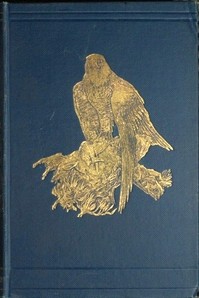
The list of illustrations hints at key visual moments: a falcon standing 'proud and fierce, one foot still grasping its victim,' a blackbird beginning his oration, a sparrow in a 'Jubilee' pose, and an owl deep in meditation. These images, by Bryan Hook, are not merely decorative—they are listed with page numbers and captions that echo the text’s dramatic moments. The frontispiece shows a falcon with its prey, suggesting that not all tales are gentle debates. The illustrations likely reinforce the blend of natural history and storytelling, offering visual cues to the birds’ expressions and postures. Readers should note how the images interact with the text’s tone.
Fowler’s book rewards a reading that moves between the naturalist’s patience and the fabulist’s wit. The opening landscape asks you to slow down; the debates ask you to listen to different voices. The excerpts suggest that each tale may have its own setting and cast, so treat the book as a collection of experiments in bird perspective rather than a single narrative. Pay attention to how Fowler uses specific details—a berry, a stream, a gesture—to anchor his stories in the real world.
Reading Tales of the Birds — A Closer Reading, I lingered on that quiet winter opening, the stillness before the birds begin their chatter. It felt like a held breath, and I found myself thinking of More Tales of the Birds — Background and Themes, which seemed to carry that same patient, unhurried attention a little further along the path.
Use these questions to collect your thoughts before moving on.