About 139 minutes
The Bird Hospital — Reading Notes
Birds
31,754 recorded words. 2 minutes difference from this book's estimate.
View Gutenberg source #48949
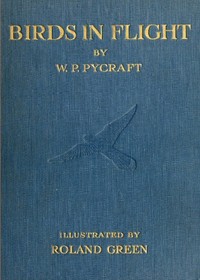
This digital edition of Birds in Flight — Edition Insights is described by source-level measurements including 31,386 words, 2 hr 17 min estimated reading time, and 5 detected text sections.
The text analysis averages about 22.4 words per sentence, while the detected sections provide another way to judge how the source is divided.
Project Gutenberg metadata also associates the work with “Birds,” connecting these edition facts with the source record’s subject description.
Explore this collection
These alternatives are selected using recorded categories and estimated reading time.
About 139 minutes
Birds
31,754 recorded words. 2 minutes difference from this book's estimate.
View Gutenberg source #48949About 131 minutes
Birds
29,914 recorded words. 6 minutes difference from this book's estimate.
View Gutenberg source #34337About 127 minutes
Birds
28,996 recorded words. 10 minutes difference from this book's estimate.
View Gutenberg source #14701Search stored excerpts and compare books → Choose by your preferences →
Choices use stored catalog measurements. Estimates vary with reading speed. A shared category is a catalog label, not a claim that two books have the same argument or literary quality.
Search reads excerpt text stored with this catalog and links to its associated Gutenberg record. The connection is stored in the site database; this tool does not recheck that every excerpt is word-for-word identical to that external record. Excerpt search does not cover every chapter and does not verify historical publication dates.
Catalog snapshot checked: 2026-09-25. Coverage: 100 public books, 100 available source excerpts.
Read the complete public-domain text at its original source.
Read on Project GutenbergW. P. Pycraft opens Birds in Flight with a detailed anatomy of the wing, describing quill feathers, skeleton, and muscles before contrasting bird wings with those of bats, flying dragons, dragonflies, and beetles. This comparative approach sets the tone for a work that moves between technical description and field observation. The book, illustrated by Roland Green, was published in 1922 and reflects Pycraft's expertise as a zoologist at the British Museum. Rather than a simple identification guide, it offers a systematic exploration of flight mechanics, wing shapes, and the evolution of birds, drawing on contemporary experiments such as Marey's studies of wing movement.
The first chapter establishes a foundation in wing structure, detailing the function of quill feathers and the skeleton. Pycraft then broadens the discussion to other flying animals: the bat's wing, the flying dragon's membrane, and the wings of dragonflies and beetles. This comparative method highlights the diversity of flight adaptations without privileging birds as the sole subject. The chapter on the first bird, likely Archaeopteryx, traces the evolution from reptilian ancestors to modern birds, emphasizing transitional features. Pycraft's language is precise, describing emarginate primaries in eagles and falcons, and the fringed appearance of outstretched wings. He notes that the inner webs of outer primary quills are suddenly reduced toward the tip, a detail visible in Green's pen-and-ink sketches.
In chapters on telling birds on the wing, Pycraft acknowledges the difficulty: “the identification of birds, during flight, is an extremely difficult task.” He advises using field-glasses and relying on clues beyond flight style, such as characteristic markings and haunts. The small perching birds are the hardest, as their flight presents “so little to distinguish one species from another.” Pycraft describes the undulating flight of passerines—rapid wing-beats alternating with a descending curve—contrasting it with the direct, slow wing-beats of crows. He provides lists of common species, noting that some merely “flit” too rapidly for color details. The text includes a diagram of twelve birds in flight, including swallow, house martin, swift, and various finches, to aid recognition.
Pycraft devotes a chapter to courtship flights, describing the wing-play of black-game, the “musical ride” of the snipe, and the raven's somersaults. He notes the “tumbling” of the lapwing and the mannikin's “castanets,” where wings produce sound. The argus-pheasant's wonderful wings are mentioned in relation to Darwin's work on wing-displays. These descriptions shift the focus from identification to behavior, showing how flight serves communication. Pycraft also discusses the use of the tail in flight, the carriage of the neck and legs, and the speed and height at which birds fly. He mentions experiments on wing size relative to flight, and the phenomenon of flight in “troops,” or flocks. The text balances anatomical detail with natural history observation, though the excerpts do not reveal the full scope of the later chapters.
Pycraft's Birds in Flight rewards readers who attend to both the technical and the observational. The book's structure—moving from anatomy to evolution to field identification—invites multiple readings. Beginners may start with the later chapters on common species, while those interested in mechanics will find the early sections on wing structure and Marey's experiments instructive. Roland Green's illustrations complement the text, though the digital edition may not reproduce them in full color. Readers should approach the work as a period piece of ornithology, grounded in early twentieth-century science, and appreciate Pycraft's insistence on the difficulty and pleasure of watching birds in motion.
I keep thinking about how Pycraft described the struggle of watching a bird in flight—the way the wings blur into motion before you can even name what you saw. It’s that same quiet wondering that stays with me after reading Migration of Birds (1950) — Background and Themes, almost like a half-remembered sky. Something tender in the unknowing, I suppose.
Use these questions to collect your thoughts before moving on.