About 137 minutes
Birds in Flight — Edition Insights
Birds
31,386 recorded words. 2 minutes difference from this book's estimate.
View Gutenberg source #45086
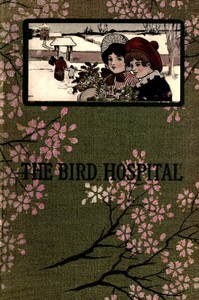
The source record for The Bird Hospital — Reading Notes measures this digital text at 31,754 words, 2 hr 19 min estimated reading time, and 4 detected text sections.
The text analysis averages about 23.7 words per sentence, while the detected sections provide another way to judge how the source is divided.
Project Gutenberg metadata also associates the work with “Conduct of life -- Juvenile literature,” connecting these edition facts with the source record’s subject description.
Explore this collection
These alternatives are selected using recorded categories and estimated reading time.
About 137 minutes
Birds
31,386 recorded words. 2 minutes difference from this book's estimate.
View Gutenberg source #45086About 131 minutes
Birds
29,914 recorded words. 8 minutes difference from this book's estimate.
View Gutenberg source #34337About 147 minutes
Birds
33,719 recorded words. 8 minutes difference from this book's estimate.
View Gutenberg source #37210Search stored excerpts and compare books → Choose by your preferences →
Choices use stored catalog measurements. Estimates vary with reading speed. A shared category is a catalog label, not a claim that two books have the same argument or literary quality.
Search reads excerpt text stored with this catalog and links to its associated Gutenberg record. The connection is stored in the site database; this tool does not recheck that every excerpt is word-for-word identical to that external record. Excerpt search does not cover every chapter and does not verify historical publication dates.
Catalog snapshot checked: 2026-09-25. Coverage: 100 public books, 100 available source excerpts.
Read the complete public-domain text at its original source.
Read on Project GutenbergCaroline Crowninshield Bascom opens The Bird Hospital not with a thesis but with a scene: a bedroom window-sill turned into a free-lunch counter for English sparrows. The birds' 'table manners' are poor, she notes dryly, and there is 'a great deal of cuffing, scratching, and angry words.' This matter-of-fact tone—observant, slightly wry, and grounded in daily routine—sets the voice for the chapters that follow. Bascom presents herself as a hands-on caretaker who learns by failure as much as success, and her narrative voice shifts between brisk practicality and moments of quiet regret.
Bascom’s prose avoids the lush sentimentality common in early twentieth-century animal literature. When a meadow-lark with a broken leg dies despite her splint, she writes simply: 'I think it must have been hurt internally.' The orchard oriole she calls the Duke drowns in a water-jar; her horror is directed at her own carelessness, not at fate. These episodes are recounted with a restraint that makes the losses more affecting. The language is plain—'I felt I had been a careless nurse'—and the emotional weight is carried by understatement rather than exclamation. This voice, direct and unadorned, gives the reader a sense of a narrator who respects both the birds and the difficulty of the work.
The narrative moves in fits and starts, mirroring the unpredictable tempo of rehabilitation. Bascom lingers over long stretches of waiting—days spent coaxing a bird to eat, weeks spent hoping a wing will heal—then accelerates into sudden, irreversible events. The story of Cady, a tame crow, unfolds in a slow accumulation of daily routines: lessons, walks, perching on a wrist. Then, in a single Sunday morning, the pace breaks. Cady flies out an open door, soars into a tree, and despite weeks of calling, never returns. The shift from patient description to abrupt loss is characteristic of the book’s structure. Bascom does not foreshadow; she lets the event land without commentary, trusting the reader to feel the weight of the sudden silence.
Certain small observations recur across the chapters, creating a consistent texture. Bascom repeatedly notes the specific perching habits of her patients: the oriole on a candle top, the crow on a dining-room table. She records the precise hour of day—'the hour when the children were returning from Sunday school'—and the exact sounds of birds answering her call. These details are not decorative; they anchor the narrative in a particular place and sensibility. The author’s attention to the physical environment—the open piazza door, the dark bedroom, the water-jar that becomes a trap—gives each case study a vivid, almost tactile setting. The cumulative effect is a portrait of a household where human and bird lives intersect in small, consequential ways.
Readers coming to The Bird Hospital should expect a collection of case histories rather than a continuous plot. Bascom’s method is episodic, and the emotional arc is cumulative. Pay attention to what she does not say—the gaps between sentences often carry more feeling than the words themselves. The book rewards a slow reading that savors the precise, unadorned observations of a woman who spent years learning what birds will and will not tolerate from the humans who try to help them.
There’s something tender about Bascom’s admission that she can’t save every bird, and I found myself thinking about that while turning through the old Check-list of the Birds of Kansas — all those names, present and gone. It felt like reading a ledger of hope and loss, the same quiet ache of loving something wild from a distance. Check-list of the Birds of Kansas — Reading Notes.
Capture what you thought, learned, and would like to remember.