About 258 minutes
In Nesting Time — Reading Notes
Birds
59,208 recorded words. 5 minutes difference from this book's estimate.
View Gutenberg source #25292
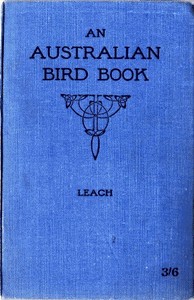
The catalog record for An Australian Bird Book: A Pocket Book for Field Use — A Closer Reading provides practical reading context through 58,056 words, 4 hr 13 min estimated reading time, and 15 detected text sections.
The text analysis averages about 15.6 words per sentence, while the detected sections provide another way to judge how the source is divided.
Project Gutenberg metadata also associates the work with “Birds -- Australia,” connecting these edition facts with the source record’s subject description.
Explore this collection
These alternatives are selected using recorded categories and estimated reading time.
About 258 minutes
Birds
59,208 recorded words. 5 minutes difference from this book's estimate.
View Gutenberg source #25292About 240 minutes
Birds
55,113 recorded words. 13 minutes difference from this book's estimate.
View Gutenberg source #50777About 268 minutes
Birds
61,553 recorded words. 15 minutes difference from this book's estimate.
View Gutenberg source #40000Search stored excerpts and compare books → Choose by your preferences →
Choices use stored catalog measurements. Estimates vary with reading speed. A shared category is a catalog label, not a claim that two books have the same argument or literary quality.
Search reads excerpt text stored with this catalog and links to its associated Gutenberg record. The connection is stored in the site database; this tool does not recheck that every excerpt is word-for-word identical to that external record. Excerpt search does not cover every chapter and does not verify historical publication dates.
Catalog snapshot checked: 2026-09-25. Coverage: 100 public books, 100 available source excerpts.
Read the complete public-domain text at its original source.
Read on Project GutenbergJ. A. Leach's An Australian Bird Book (1911) is a field guide built for quick identification, yet its structure reveals an author equally concerned with teaching. The original print edition split each page horizontally: the top half carried a compact table of species—with measurements, plumage descriptions, and habitat codes—while the bottom half contained a continuous “Lecture” on the order or family. This dual arrangement, preserved in the digital edition by reordering the lecture text before the tables, lets the reader encounter explanatory prose before the dense data. Leach, a headmaster and ornithologist, designed the book to serve both the casual observer and the serious student, a balance visible in his choice of language: precise enough for the field, but never dry.
The most striking authorial choice is the physical division of the page. Leach did not simply list species; he paired each table with a lecture that explains classification, behavior, and distribution. For example, the entry for the Superb Parrot (Polytelis barrabandi) appears in the table with a terse string: “16 Green; forehead, cheeks, throat rich gamboge-yellow; crescent of scarlet next to yellow on chest.” But the lecture section, now placed before the table, would have provided context on the bird’s range and habits. This separation forces the reader to move between two modes of attention—scanning for data and reading for understanding. Leach trusted his audience to toggle between them, a pedagogical gamble that rewards patient study.
Leach’s diction in the tables is economical and sensory. He favors precise color terms: “gamboge-yellow,” “iridescent black,” “rich deep crimson.” Measurements are given in inches and half-inches, often with a single number for overall length (e.g., “13.5” for the Crimson Rosella). Habitat is compressed into codes like “timber,” “open,” “mallee scrub,” or “lofty river gums.” The effect is a shorthand that assumes the reader knows the landscape. Leach also includes colloquial names—Smoker, Bulla-Bulla, Quarrion—alongside scientific ones, acknowledging the vernacular of bush observers. This dual naming system bridges formal ornithology and local knowledge, a choice that grounds the guide in Australian field practice.
The digital edition includes a section titled “NAMES RECENTLY AMENDED,” listing updated scientific names with a tilde notation (e.g., “[~20 Rallus pectoralis .]”). This addition, likely from a later printing, shows Leach’s commitment to currency. The transcriber’s note explains that the original page layout was rearranged for the ebook: the lecture sections were moved to precede the tables, and page numbers were omitted from lectures but retained as clickable links in the index. These editorial interventions alter the reading experience—what was once a simultaneous split becomes sequential. Readers of the digital version encounter the lecture first, then the table, which subtly shifts the emphasis from reference to instruction.
Leach’s tables are dense with numerical codes. Each species entry begins with a number (e.g., “197” for the Superb Parrot), followed by a second number indicating the page in the original lecture section. The table for Psittacidae lists 47 species, with totals for Australia and other regions in parentheses: “144(144)A., 49(49)O., 42(42)E., 2(l)Nc., 197(196)Nl.” This statistical framing—common in early ornithology—gives the guide a taxonomic authority. Yet Leach leavens the data with evaluative phrases: “Showy, noble species” for the King Parrot, or “Exceedingly lovely bird, a harmony in blue and canary yellow” for the Yellow Rosella. These subjective judgments, rare in modern field guides, reveal Leach’s personal enthusiasm and his era’s willingness to blend science with aesthetic appreciation.
Leach’s book rewards a nonlinear reading: start with a table to find a bird, then turn to the lecture for context, or read a lecture first to understand a family before diving into the species list. The digital edition’s rearrangement makes this two-step process more deliberate. For the modern reader, the guide offers not only identification tools but a window into how early Australian ornithologists thought about classification, habitat, and the act of watching birds. Pay attention to the names—both scientific and colloquial—and to the numbers that anchor each entry in a system Leach helped shape.
Sometimes I think of Leach’s old pocket guide, its tidy tables of wing-spans and nest-sites, and how it held a whole continent’s chatter between its covers. That same fond patience breathes in Tales of the birds — A Closer Reading, where observation turns to quiet companionship. Both whisper that naming a bird is only the beginning of knowing it.
Build a private reading journal entry for this title.