About 277 minutes
Little Brothers of the Air — Story, Setting & Ideas
Birds
63,648 recorded words. 20 minutes difference from this book's estimate.
View Gutenberg source #27277
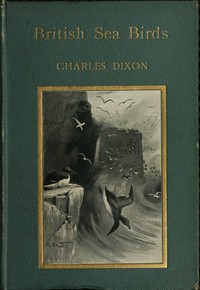
British Sea Birds — Context and Discussion can be approached with a clearer sense of reading commitment from its source measurements: 68,260 words, 4 hr 57 min estimated reading time, and 8 detected text sections.
The text analysis averages about 25.7 words per sentence, while the detected sections provide another way to judge how the source is divided.
Project Gutenberg metadata also associates the work with “Birds -- Great Britain,” connecting these edition facts with the source record’s subject description.
Explore this collection
These alternatives are selected using recorded categories and estimated reading time.
About 277 minutes
Birds
63,648 recorded words. 20 minutes difference from this book's estimate.
View Gutenberg source #27277About 268 minutes
Birds
61,553 recorded words. 29 minutes difference from this book's estimate.
View Gutenberg source #40000About 258 minutes
Birds
59,208 recorded words. 39 minutes difference from this book's estimate.
View Gutenberg source #25292Search stored excerpts and compare books → Choose by your preferences →
Choices use stored catalog measurements. Estimates vary with reading speed. A shared category is a catalog label, not a claim that two books have the same argument or literary quality.
Search reads excerpt text stored with this catalog and links to its associated Gutenberg record. The connection is stored in the site database; this tool does not recheck that every excerpt is word-for-word identical to that external record. Excerpt search does not cover every chapter and does not verify historical publication dates.
Catalog snapshot checked: 2026-09-25. Coverage: 100 public books, 100 available source excerpts.
Read the complete public-domain text at its original source.
Read on Project GutenbergCharles Dixon’s British Sea Birds (1896) opens with a detailed examination of gulls and terns, emphasizing the variability of plumage with age and season. The author notes that “changes of plumage” are a recurring theme, as birds like the black-headed gull lose their dark hoods in winter. Dixon’s method is taxonomic yet vivid: he describes the great black-backed gull as “the largest and most powerful of the British Gulls,” and the kittiwake as “the most oceanic of our Gulls.” The text is grounded in field observation, noting how birds like the common tern “hover on rapidly vibrating wings” before plunging for fish.
Dixon repeatedly draws attention to the transformation of feathers across the year. The black-throated diver, for instance, is described as “the most beautiful in nuptial dress,” with a black throat patch and white-spotted upper parts, yet after the autumn moult “all this finery is lost” and the upper parts become “a nearly uniform blackish-brown.” This seasonal shift is not merely aesthetic; it signals changes in behavior and habitat. The author notes that immature birds often keep further out to sea, while adults in breeding plumage are more likely to be seen inshore. Similarly, the red-throated diver’s “chestnut-red throat patch” is only present during the breeding season. Dixon’s careful documentation of these changes provides a practical field guide for identifying birds at different times of year.
Dixon’s descriptions of nesting behavior are precise and often emphasize the vulnerability of eggs and chicks. The black-throated diver nests on islands in moorland lochs, constructing a “slight” nest of plant stalks and roots, sometimes “no nest whatever is made.” The sitting bird is “ever on the alert to slip off into the water at the first alarm,” and both parents may “fly round and round in anxiety for the fate of their treasured eggs.” The great northern diver similarly “shuffles off in a floundering way to the water” when disturbed, wearing a path from nest to lake. These observations highlight the tension between land-based reproduction and aquatic life, a theme that runs through the book. Dixon also notes that divers may “pair for life,” showing attachment to specific nesting sites.
Dixon situates British seabirds within a broader geographic context. The black-throated diver, for example, “has a wide geographical range outside our limits, extending across Europe and Asia to Japan and North-west America.” Yet he is careful to note that American authorities “insist upon the specific distinctness of most of the Black-throated Divers found in Alaska.” This reflects the taxonomic debates of the era. Migration is a central concern: the final chapter is devoted to “Migration on the Coast,” describing the “best coasts for observing migration” and the “order of appearance of migratory birds” in spring and autumn. Dixon observes that many species, like the black-throated diver, are only winter visitors to Britain, retiring to inland haunts in May to breed. The text thus balances local detail with a sense of the birds’ wider journeys.
Dixon’s work rewards readers who attend to the interplay between description and inference. The excerpts reveal a naturalist who is as interested in the bird’s life cycle as in its classification. For those consulting this volume as a reference, the detailed accounts of plumage changes and nesting sites are especially useful. Readers should note that the text reflects late-nineteenth-century ornithological conventions, including occasional references to “unearthly cries” and “nomad wandering life.” The eight illustrations by Charles Whymper complement the text, though they are not reproduced in this digital edition.
This book made me think of my grandfather’s worn field guide, the one he kept by the window. Flipping through Dixon's careful notes on petrels, I felt that same quiet awe—how names can hold a life. Later, A Synopsis of the Birds of North America — Themes and Context returned me to that hush, a shared patience for feathers and flight.
A brief reflection can help important ideas stay with you longer.