About 126 minutes
Mammals of the San Gabriel Mountains of California — Themes and Context
Marine Life
28,861 recorded words. 41 minutes difference from this book's estimate.
View Gutenberg source #34848
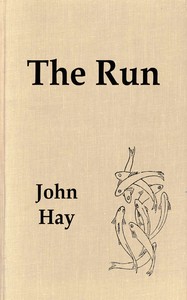
This digital edition of The run — Reading Notes is described by source-level measurements including 38,211 words, 2 hr 47 min estimated reading time, and 21 detected text sections.
The text analysis averages about 22.7 words per sentence, while the detected sections provide another way to judge how the source is divided.
Project Gutenberg metadata also associates the work with “Cape Cod (Mass.),” connecting these edition facts with the source record’s subject description.
Explore this collection
These alternatives are selected using recorded categories and estimated reading time.
About 126 minutes
Marine Life
28,861 recorded words. 41 minutes difference from this book's estimate.
View Gutenberg source #34848About 125 minutes
Marine Life
28,668 recorded words. 42 minutes difference from this book's estimate.
View Gutenberg source #52390About 114 minutes
Marine Life
26,179 recorded words. 53 minutes difference from this book's estimate.
View Gutenberg source #36036Search stored excerpts and compare books → Choose by your preferences →
Choices use stored catalog measurements. Estimates vary with reading speed. A shared category is a catalog label, not a claim that two books have the same argument or literary quality.
Search reads excerpt text stored with this catalog and links to its associated Gutenberg record. The connection is stored in the site database; this tool does not recheck that every excerpt is word-for-word identical to that external record. Excerpt search does not cover every chapter and does not verify historical publication dates.
Catalog snapshot checked: 2026-09-25. Coverage: 100 public books, 100 available source excerpts.
Read the complete public-domain text at its original source.
Read on Project GutenbergJohn Hay opens The Run in March, standing beside a Cape Cod creek in “comparative ignorance” of the alewives he has come to watch. The book is not a field guide but a record of sustained attention: Hay returns day after day, noting how the fish appear and vanish with shifts in light and wind, how their movements seem coordinated “like the beat of a wing.” His language is exact—he describes “crosshatches” on the water, the “rippling weave of light” on the channel floor—yet he resists claiming more than he sees. The alewives remain partly unknowable, their mission “always beyond knowing.”
Hay’s narrative begins not with arrival but with waiting. The first chapter, “Waiting Weather,” establishes a patient, almost suspended tone. He looks for forerunners in cold waters, knowing the main run has not yet come. The prose mirrors this stillness: sentences are measured, observations accumulate without rush. When the fish finally appear, the pace shifts. Hay describes them as “a floor of turning, slowly moving alewives,” then notes sudden bursts—a “lively one dashing through the rest,” the collective “quick and graceful stampede” when his shadow falls across them. The rhythm of the writing follows the rhythm of the fish: slow procession, then flicker of speed.
Hay repeatedly acknowledges what he cannot determine. Watching a school, he admits “you could not say categorically that they were all moving inland” because spent fish returning to the sea mix with those still heading up. He distinguishes them by white fungus patches, but the uncertainty remains. His foreword frames the whole project as “an attempt to go farther afield, from one man’s center”—a migration of understanding, not a definitive account. The alewives “helped to open the world for me,” he writes, “although the outcome of their circling was always beyond knowing.” This humility shapes the book’s voice: Hay offers evidence, not conclusions.
Hay’s central claim is ethical: alewives have “an equal status with us in the great motions of this planet.” He argues that humans “cannot be complete without granting equal dignity to the unsurpassed uniqueness of other forms of life.” This conviction emerges not through argument but through the care of his descriptions. He notes the alewives’ diet—plankton, copepods, amphipods—and their fasting during migration. He records that they can eat their own young if small enough, without judgment. The book’s structure, following the run from arrival to spawning to return, enacts the motion it describes, treating the fish’s journey as worthy of full narrative attention.
The Run rewards readers who accept its pace. Hay does not hurry toward drama; he stays with the creek, the light, the fish. The book’s twenty-one sections trace a single seasonal movement, and its voice—attentive, speculative, restrained—invites the same patience Hay practiced. Read it as a record of looking closely at one creature’s migration, and as a meditation on what it means to share a planet with lives not our own.
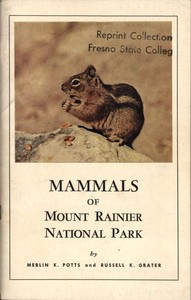
Hay’s alewives return to the same pond each spring, their persistence both ancient and strangely tender. I found myself thinking of that quiet, unassuming patience lately, and of how some creatures simply belong to a place. That feeling surfaced again while reading Mammals of Mount Rainier National Park — Reading Companion, where each species seems to hold its own quiet claim to the mountain’s slopes, equally worthy of wonder.
Capture what you thought, learned, and would like to remember.
![Cover of Subspeciation in Pocket Gophers of Kansas, [KU. Vol. 1 No. 11] — Themes and Context](https://abgoa.com/storage/media/covers/pg36653.jpg)