About 126 minutes
Mammals of the San Gabriel Mountains of California — Themes and Context
Marine Life
28,861 recorded words. 1 minutes difference from this book's estimate.
View Gutenberg source #34848
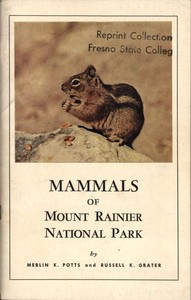
The catalog record for Mammals of Mount Rainier National Park — Reading Companion provides practical reading context through 28,668 words, 2 hr 5 min estimated reading time, and 4 detected text sections.
The text analysis averages about 21.8 words per sentence, while the detected sections provide another way to judge how the source is divided.
Project Gutenberg metadata also associates the work with “Mammals -- Washington (State) -- Mount Rainier National Park,” connecting these edition facts with the source record’s subject description.
Explore this collection
These alternatives are selected using recorded categories and estimated reading time.
About 126 minutes
Marine Life
28,861 recorded words. 1 minutes difference from this book's estimate.
View Gutenberg source #34848About 114 minutes
Marine Life
26,179 recorded words. 11 minutes difference from this book's estimate.
View Gutenberg source #36036About 167 minutes
Marine Life
38,211 recorded words. 42 minutes difference from this book's estimate.
View Gutenberg source #77074Search stored excerpts and compare books → Choose by your preferences →
Choices use stored catalog measurements. Estimates vary with reading speed. A shared category is a catalog label, not a claim that two books have the same argument or literary quality.
Search reads excerpt text stored with this catalog and links to its associated Gutenberg record. The connection is stored in the site database; this tool does not recheck that every excerpt is word-for-word identical to that external record. Excerpt search does not cover every chapter and does not verify historical publication dates.
Catalog snapshot checked: 2026-09-25. Coverage: 100 public books, 100 available source excerpts.
Read the complete public-domain text at its original source.
Read on Project GutenbergThis guide, written by two park naturalists and published in 1949, opens with a foreword by Superintendent John C. Preston that frames the national parks as rare sanctuaries where wild animals remain free and relatively unafraid of humans. The authors then move quickly into practical matters: a discussion of wildlife trends and problems, a description of the park's four life zones (Humid Transition, Canadian, Hudsonian, Arctic-alpine), and then the core of the book—individual accounts of each mammal species known to occur in the park. The structure is systematic yet accessible, designed for field use rather than academic reference.
The book divides Mount Rainier's terrain into four altitudinal life zones, each with characteristic vegetation and mammal communities. The Humid Transition zone (lowest, dominated by Douglas fir and western hemlock) hosts black-tailed deer and black bears. The Canadian zone (mid-elevation, with Pacific silver fir) is home to the Cascade mantled ground squirrel and Douglas pine squirrel. The Hudsonian zone (subalpine, with mountain hemlock and meadows) features the Cascade hoary marmot and mountain goat. The Arctic-alpine zone (above treeline) supports only hardy species like the pika. This zonation is not merely descriptive; it shapes the reader's expectation of where to find each animal and why certain species overlap or replace one another along the elevational gradient.
Each mammal entry follows a consistent pattern: scientific name, common name, physical description, habitat, behavior, and park-specific notes. The authors frequently acknowledge gaps in knowledge. For the varying hare, they present conflicting descriptions from three mammalogists (Anthony, Taylor & Shaw, and Dalquest) regarding winter coat color—ranging from brown to white to nearly black—and conclude that positive field identification of the two subspecies is usually impossible. Similarly, the account of the Cascade flying squirrel notes that its nocturnal habits make it rarely seen, and the porcupine entry cites conflicting reports on its predators. These honest admissions of uncertainty lend the guide a scientific credibility that a more dogmatic treatment would lack.
Throughout the text, the park itself emerges as a character. The frontispiece shows Bench Lake in the Hudsonian zone; photographs of forest scenes from each life zone appear as plates. The authors repeatedly emphasize the visitor's opportunity to observe animals in natural settings—a black bear foraging in a meadow, a mountain goat on a cliff, a beaver at its lodge. Yet they also caution that many species are secretive or nocturnal, and that tracks, scat, or other signs are often the only evidence. This tension between visibility and elusiveness gives the guide a quiet drama: the reader is invited to become a patient watcher, attuned to subtle clues in the landscape.
The book's structure mirrors the vertical movement of both animals and visitors. Species accounts note elevational ranges and seasonal migrations: black-tailed deer move to lower elevations in winter, while mountain goats descend from Arctic-alpine zones during storms. The varying hare's winter coat varies with elevation—white at higher altitudes, brown at lower—a detail that ties physical appearance directly to place. The authors also track the movement of predators like coyotes and cougars, which follow prey across zones. This dynamic, layered geography makes the guide more than a checklist; it becomes a field manual for reading the mountain's living landscape across time and altitude.
Readers will find this guide most useful when taken on the trail, not read straight through. The species accounts reward browsing by habitat or elevation, and the honest treatment of identification challenges encourages careful observation rather than quick labeling. The book's 1949 publication date means some scientific names and conservation statuses have changed, but its core value—teaching a naturalist's attention to place and creature—remains fresh.
This guide’s patient section on pikas—their haypiles and alarm calls—made me think of a summer I spent lying in alpine meadows, watching them dart between rocks. That unhurried attention reminded me of how The run — Reading Notes once slowed my own walking into noticing, each step a small census of the world. Both books feel like a hand resting on a log, waiting quietly for what appears.
A brief reflection can help important ideas stay with you longer.

![Cover of Subspeciation in Pocket Gophers of Kansas, [KU. Vol. 1 No. 11] — Themes and Context](https://abgoa.com/storage/media/covers/pg36653.jpg)