About 48 minutes
A Check-List of the Birds of Idaho — A Reader’s Guide
Birds
11,027 recorded words. 6 minutes difference from this book's estimate.
View Gutenberg source #35968
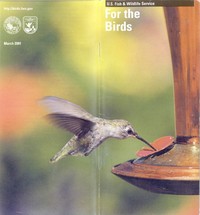
For the Birds — Story, Setting & Ideas can be approached with a clearer sense of reading commitment from its source measurements: 12,354 words, 54 min estimated reading time, and 2 detected text sections.
The text analysis averages about 18.4 words per sentence, while the detected sections provide another way to judge how the source is divided.
Project Gutenberg metadata also associates the work with “Birds -- United States,” connecting these edition facts with the source record’s subject description.
Explore this collection
These alternatives are selected using recorded categories and estimated reading time.
About 48 minutes
Birds
11,027 recorded words. 6 minutes difference from this book's estimate.
View Gutenberg source #35968About 41 minutes
Birds
9,216 recorded words. 13 minutes difference from this book's estimate.
View Gutenberg source #33412About 41 minutes
Birds
9,242 recorded words. 13 minutes difference from this book's estimate.
View Gutenberg source #34546Search stored excerpts and compare books → Choose by your preferences →
Choices use stored catalog measurements. Estimates vary with reading speed. A shared category is a catalog label, not a claim that two books have the same argument or literary quality.
Search reads excerpt text stored with this catalog and links to its associated Gutenberg record. The connection is stored in the site database; this tool does not recheck that every excerpt is word-for-word identical to that external record. Excerpt search does not cover every chapter and does not verify historical publication dates.
Catalog snapshot checked: 2026-09-25. Coverage: 100 public books, 100 available source excerpts.
Read the complete public-domain text at its original source.
Read on Project GutenbergThe guide opens with a nostalgic appeal, linking bird discovery to childhood memory: “the discoveries of songbirds nesting in the backyard” and the “distinctive, mud-lined nests of robins.” This warm, generalized tone quickly gives way to a practical register. The very next paragraph shifts to imperatives: “you may wish to improve the ‘habitat’ in your yard.” The voice moves from fond recollection to actionable advice, a pattern that recurs throughout.
The text relies on concrete numbers and species names to build authority. It cites “65 million Americans” who feed birds, and names specific birds—cardinal, goldfinch, hummingbird—tied to regional feeders. This specificity grounds the general advice in observable reality.
The opening paragraphs frame birding as a universal childhood pleasure, using phrases like “fondest and most memorable moments.” This sentimental tone is deliberate: it invites readers into a shared experience. But once the guide moves to “Getting Started,” the language becomes instructional. Sentences shorten. Commands appear: “determine what birds are likely to occur in your area.” The shift is abrupt, as if the writer assumes the reader’s emotional buy-in is complete.
This dual voice persists. When discussing feeder placement, the text warns: “food that sits on the ground for even a short time is exposed to contamination.” The warning is direct, almost clinical. Yet later, it reassures: “Don’t worry that the adults will reject the nestlings if you handle them. That’s a myth.” The guide oscillates between authoritative caution and gentle debunking, a rhythm that keeps the reader engaged without condescension.
The guide’s credibility rests on specific numbers and named birds. It advises “100 yards between bluebird boxes and 75 yards between swallow boxes.” It specifies “¾-inch wall” thickness for predator guards and recommends “three-inch overhang” on roofs. These details are not decorative; they are actionable instructions. The text assumes the reader will measure, cut, and place.
Species are not generic. The guide mentions “house wrens, cardinals, chickadees” and later “purple martin houses.” Each species comes with tailored advice: bluebird boxes need spacing, swallow boxes pair with bluebird boxes. This specificity prevents the guide from being a one-size-fits-all pamphlet. It acknowledges regional variation—Virginia cardinals versus Massachusetts goldfinches—and forces the reader to consult local field guides.
The guide’s pace changes markedly when it shifts to lists. The section “Here are some tips on where to put bird houses” is a bulleted list of do’s and don’ts: “don’t put bird houses near bird feeders,” “use no more than four small nest boxes per acre.” The list form accelerates reading, delivering information efficiently. But the text also slows down for warnings, such as the paragraph on cats: “Nesting birds are extremely vulnerable to cats.” The warning is stark, followed by specific deterrents—metal poles, petroleum jelly and hot pepper mixture. The pace slows to emphasize risk.
This alternation between rapid lists and deliberate warnings creates a rhythm that mirrors the practical task: quick reference for placement, careful consideration for safety. The guide trusts the reader to switch modes, from scanning tips to absorbing cautionary details.
Readers should note that the guide’s authority comes from its institutional source, not personal narrative. The voice remains that of an agency offering tested methods. The most useful approach is to read the sections on feeder and house placement with a tape measure and local bird list in hand, treating the guide as a reference to be consulted, not a story to be followed.
Rereading the Service’s guide, I noticed how its warm, practical tone—the exact measurements, the careful species lists—settled into me like a remembered morning. That specificity made me think of In Nesting Time — Reading Notes, not because both offer instruction, but because each holds a quiet trust in close observation. The guide’s honest shift from reverie to advice stayed with me all day.
Capture what you thought, learned, and would like to remember.