About 36 minutes
My Robin — Reading Companion
Birds
8,187 recorded words. 10 minutes difference from this book's estimate.
View Gutenberg source #5304
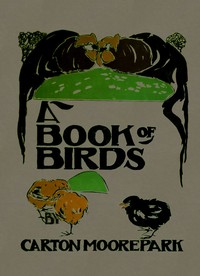
This digital edition of A Book of Birds — Background and Themes is described by source-level measurements including 5,760 words, 26 min estimated reading time, and 1 detected text section.
The text analysis averages about 25.7 words per sentence, while the detected sections provide another way to judge how the source is divided.
Project Gutenberg metadata also associates the work with “Birds -- Juvenile literature,” connecting these edition facts with the source record’s subject description.
Explore this collection
These alternatives are selected using recorded categories and estimated reading time.
About 36 minutes
Birds
8,187 recorded words. 10 minutes difference from this book's estimate.
View Gutenberg source #5304About 41 minutes
Birds
9,216 recorded words. 15 minutes difference from this book's estimate.
View Gutenberg source #33412About 41 minutes
Birds
9,242 recorded words. 15 minutes difference from this book's estimate.
View Gutenberg source #34546Search stored excerpts and compare books → Choose by your preferences →
Choices use stored catalog measurements. Estimates vary with reading speed. A shared category is a catalog label, not a claim that two books have the same argument or literary quality.
Search reads excerpt text stored with this catalog and links to its associated Gutenberg record. The connection is stored in the site database; this tool does not recheck that every excerpt is word-for-word identical to that external record. Excerpt search does not cover every chapter and does not verify historical publication dates.
Catalog snapshot checked: 2026-09-25. Coverage: 100 public books, 100 available source excerpts.
Read the complete public-domain text at its original source.
Read on Project GutenbergCarton Moore-Park's A Book of Birds (1916) introduces each species with a blend of factual observation and whimsical characterization. The Flamingo, for instance, is described as standing "like a soldier at attention," while the Vulture is cast as a diligent housekeeper "tidying up for Dame Nature." This anthropomorphic lens extends to the Magpie, portrayed as a quarrelsome thief, and the Penguin, a "humpty-dumpty bird" whose fat serves as a "greatcoat." The prose is concise, often personifying birds with human traits—the Wren "cheers us with her song" through winter, and the Eagle is debated as "King of Birds." Moore-Park's diction is accessible, favoring vivid, concrete images over scientific terminology, making the book suitable for young readers while retaining a distinctive narrative voice.
Moore-Park consistently attributes human behaviors and social roles to birds. The Vulture is "very busy in tidying up for Dame Nature," framing scavenging as a civic duty. The Magpie is "not, as a rule, on good terms with his neighbours"—a characterization that echoes human gossip and conflict. The Penguin's parenting is described with empathy: "while the little Penguins grow sleek and podgy, the poor old birds become so scraggy." This technique makes the birds relatable but risks oversimplifying their ecology. The author does not claim these traits are literal; rather, they serve as mnemonic devices. For example, the Flamingo's "military appearance" is a visual analogy, not a behavioral claim. Such personification was common in early 20th-century natural history for children, but Moore-Park executes it with restraint, grounding each trait in observable features.
Several entries carry implicit moral lessons. The Vulture is deemed "very useful" despite being an unappealing pet, suggesting that utility outweighs charm. The Magpie's thievery is condemned, yet the text acknowledges its role in controlling grubs and slugs—a nuanced view of ecological balance. The Eagle's disputed kingship introduces a debate on worthiness, hinting at themes of merit versus reputation. The Owl's "Hoot-toot!" serves as a warning to prey, reinforcing a natural order. These moral undercurrents are subtle, never didactic, and likely reflect Edwardian attitudes toward nature as a source of ethical instruction. The book avoids overt sentimentality, however; the Wren's winter song is praised without excessive pathos. Moore-Park balances instruction with entertainment, letting the birds' behaviors speak for themselves.
Moore-Park's language is notably economical. He describes the Flamingo in a single sentence: "most happy standing on one leg in a foot or two of water." The Penguin's flightlessness is captured as "far too fat to fly—the best he can do is to waddle." Such phrasing is direct and memorable. He avoids Latinate terms, preferring Anglo-Saxon roots: "grubs and slugs," "snug home," "bitterly cold waters." The rhythm is conversational, with occasional alliteration ("sleek and podgy") and colloquialisms ("not above stealing eggs"). This style suits the intended juvenile audience but does not talk down. The descriptions are vivid yet brief, rarely exceeding a paragraph per bird. The author trusts the reader to infer broader patterns from these snapshots, a technique that keeps the text lively and avoids the tedium of exhaustive catalogues.
The book presents birds in an apparently arbitrary sequence, from Flamingo to Owl, without taxonomic or geographic grouping. This suggests an aesthetic or thematic arrangement rather than a scientific one. The selection favors charismatic or easily anthropomorphized species: the Flamingo's striking color, the Vulture's grim role, the Penguin's comical shape. Common British birds like the Wren and Magpie appear alongside exotics, implying a global scope. The absence of songbirds beyond the Wren is notable; perhaps Moore-Park prioritized visual distinctiveness. The entries are self-contained, allowing random access. The brevity of each account (around 100 words) and the lack of illustrations in the text (though the original likely had plates) mean the prose must carry the descriptive weight. This structure suits a young reader's attention span while offering a sampler of avian diversity.
A Book of Birds rewards readers who appreciate concise, character-driven natural history. Moore-Park's anthropomorphic style invites comparison with Beatrix Potter's animal stories, though his focus remains on factual observation. The book's brevity and episodic structure make it ideal for browsing rather than sequential reading. Readers may note how the author's choices—from the moral framing of the Vulture to the military simile for the Flamingo—reflect early 20th-century attitudes toward nature. For those interested in the evolution of children's nonfiction, this work offers a clear example of how scientific information was once packaged with narrative flair.
Capture what you thought, learned, and would like to remember.