About 237 minutes
Beginners' zoology — Story, Setting & Ideas
Animals
54,350 recorded words. 1 minutes difference from this book's estimate.
View Gutenberg source #73338
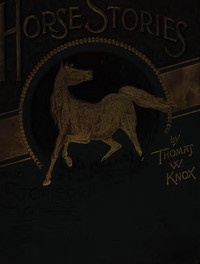
For Horse Stories, and Stories of Other Animals — A Closer Reading, the stored edition analysis reports 54,661 words, 3 hr 58 min estimated reading time, and 8 detected text sections.
The text analysis averages about 23.3 words per sentence, while the detected sections provide another way to judge how the source is divided.
Project Gutenberg metadata also associates the work with “Animals -- Anecdotes,” connecting these edition facts with the source record’s subject description.
Explore this collection
These alternatives are selected using recorded categories and estimated reading time.
About 237 minutes
Animals
54,350 recorded words. 1 minutes difference from this book's estimate.
View Gutenberg source #73338About 241 minutes
Animals
55,420 recorded words. 3 minutes difference from this book's estimate.
View Gutenberg source #3031About 245 minutes
Animals
56,328 recorded words. 7 minutes difference from this book's estimate.
View Gutenberg source #18767Search stored excerpts and compare books → Choose by your preferences →
Choices use stored catalog measurements. Estimates vary with reading speed. A shared category is a catalog label, not a claim that two books have the same argument or literary quality.
Search reads excerpt text stored with this catalog and links to its associated Gutenberg record. The connection is stored in the site database; this tool does not recheck that every excerpt is word-for-word identical to that external record. Excerpt search does not cover every chapter and does not verify historical publication dates.
Catalog snapshot checked: 2026-09-25. Coverage: 100 public books, 100 available source excerpts.
Read the complete public-domain text at its original source.
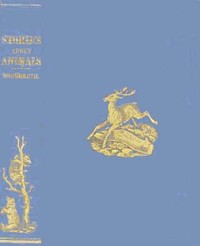
Read on Project GutenbergThe book opens with Charley and George petitioning their father for horses, a request that leads to a series of instructive conversations. The framing device—two boys learning about animal behavior through stories—shapes the entire work. Knox uses the boys' dialogue to introduce each anecdote, creating a natural, conversational tone. The father, Mr. Graham, serves as the voice of experience, often citing specific examples from his own life or from well-known sources.
The author's diction is direct and unadorned, favoring plain statements over embellishment. Descriptions of animal actions are precise: a horse that 'went for assistance' or a cat that 'fled so precipitately from a good-looking negro girl, that it tumbled into a grating.' Knox's voice is that of a patient instructor, not a sensationalist.
Knox structures the book as a series of dialogues between Charley, George, and their father, Mr. Graham. This framing allows the author to present moral lessons without overt lecturing. The boys' curiosity drives the narrative, and their father responds with anecdotes that illustrate principles of kindness and observation. For example, when Charley says, 'I would treat them kindly,' Mr. Graham does not simply praise him but follows with a story about 'Old Jane' to reinforce the point. The dialogue is naturalistic but purposeful; every exchange advances a lesson. The tone is consistently didactic but never condescending, as Knox trusts his young readers to follow the reasoning. The father's responses often include direct quotations from other sources, such as Théophile Gautier's cat anecdote, blending personal experience with literary authority. This technique gives the book a layered texture, where the boys' immediate questions open into broader cultural references.
Knox's descriptions of animal behavior are notably specific and grounded in observable detail. When describing a cat's reaction to a soap bubble, he writes that the cat 'was so demoralized at the mystery as to grow big-tailed, and spit at any soap bubble which might happen to fall to the floor and drift across it.' The phrase 'grow big-tailed' is a vivid, colloquial touch that captures the cat's fear. Similarly, the account of a cat at a tea party includes precise actions: 'With their fore-paws on the table, they lapped the milk with becoming propriety.' Knox avoids anthropomorphism by focusing on physical actions rather than attributing complex emotions. He reports what the animals do, not what they feel. This restraint gives the anecdotes a documentary quality, even when the stories are clearly selected for their entertainment value. The author's background as a travel writer and journalist likely informs this preference for concrete detail over sentimental interpretation.
The book draws from a wide array of sources, including personal observation, newspaper clippings, and literary works. Knox cites 'The Kingston Freeman' for a story about a cat that eats with a fork, and Théophile Gautier for a cat frightened by a parrot. This eclecticism reflects the author's belief that animal intelligence can be documented through credible testimony. The anecdotes range from the practical (fire horses in New York) to the whimsical (cat parties with 'floral decorations consisted of catnip, lavender, grasses, and bright flowers'). Knox does not privilege one type of story over another; a serious account of an army horse's memory sits alongside a humorous tale of a cat's fear of a parrot. This variety keeps the reader engaged and suggests that animal behavior is both instructive and amusing. The author's willingness to include newspaper reports indicates a trust in contemporary journalism as a source of reliable anecdote.
Throughout the book, Knox promotes a clear moral: kindness to animals is both a duty and a practical approach to training. However, he avoids sentimentality. The lesson is delivered through example rather than exhortation. When Mr. Graham tells the story of a horse that went for assistance, the focus is on the horse's intelligence, not on the owner's emotional response. The author's diction is matter-of-fact: 'The horse that Went for Assistance—A Grateful Patient.' The word 'patient' is clinical, not emotional. Knox also includes stories that acknowledge animal fear and aggression, such as the cat that 'fled so precipitately' from a stranger. These moments prevent the book from becoming a simple celebration of animal virtue. The moral framework is consistent but understated, allowing the anecdotes to speak for themselves. This approach aligns with the book's stated purpose: to provide 'experience of two boys in managing horses' through practical examples.
Readers will find that Knox's method of embedding lessons within stories makes the book suitable for both independent reading and shared discussion. The conversational frame invites the reader to imagine themselves in the boys' place, asking questions and learning alongside them. Pay attention to how the author transitions between anecdotes—often a single sentence from Mr. Graham or a question from the boys—as this reveals the book's underlying structure as a series of teachable moments. The variety of sources also rewards attention: a newspaper clipping may appear without comment, leaving the reader to judge its credibility.
Reading this old book, I remembered sitting in my grandfather's barn, watching his old mare blink slowly at the dusk. He never spoke of her intelligence, but we both knew it. That quiet knowing returned while reading Artistic Anatomy of Animals — Reading Notes, where a different kind of patience, a study of bone and sinew, held the same reverence for what a body carries.
Create a short personal record of your experience with this book.