About 17 minutes
A New Pocket Mouse (Genus Perognathus) from Kansas — Inside the Classic
Animals
3,884 recorded words. 0 minutes difference from this book's estimate.
View Gutenberg source #31046
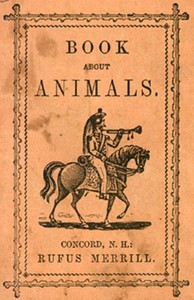
Before opening Book about Animals — Reading Companion, the edition data offers a quick orientation: 3,894 words, 17 min estimated reading time, and 1 detected text section.
The text analysis averages about 24.0 words per sentence, while the detected sections provide another way to judge how the source is divided.
Project Gutenberg metadata also associates the work with “Animals -- Juvenile literature,” connecting these edition facts with the source record’s subject description.
Explore this collection
These alternatives are selected using recorded categories and estimated reading time.
About 17 minutes
Animals
3,884 recorded words. 0 minutes difference from this book's estimate.
View Gutenberg source #31046About 17 minutes
Animals
3,718 recorded words. 0 minutes difference from this book's estimate.
View Gutenberg source #31147About 18 minutes
Animals
4,087 recorded words. 1 minutes difference from this book's estimate.
View Gutenberg source #34836Search stored excerpts and compare books → Choose by your preferences →
Choices use stored catalog measurements. Estimates vary with reading speed. A shared category is a catalog label, not a claim that two books have the same argument or literary quality.
Search reads excerpt text stored with this catalog and links to its associated Gutenberg record. The connection is stored in the site database; this tool does not recheck that every excerpt is word-for-word identical to that external record. Excerpt search does not cover every chapter and does not verify historical publication dates.
Catalog snapshot checked: 2026-09-25. Coverage: 100 public books, 100 available source excerpts.
Read the complete public-domain text at its original source.
Read on Project GutenbergRufus Merrill's Book about Animals (1850) opens each animal entry with a blunt, almost formulaic sentence: 'The Elephant is the biggest of all land animals.' This pattern—a simple statement of size or kind—recurs throughout the excerpts, establishing a steady, predictable rhythm. Yet within that uniformity, the narrative voice subtly shifts. Some entries remain purely descriptive, while others slip into moral commentary, as when the Rabbit is called 'harmless and innocent' and the Elephant 'a harmless creature.' The prose is concise, rarely exceeding a few paragraphs per animal, and relies on concrete details: the Opossum's fifty teeth, the Antelope's three-curved horns. There is no overarching argument or story; the book is a series of discrete portraits, each self-contained.
Each entry in the excerpts follows a predictable sequence: a statement of identity or size, a physical description, then behavior or habitat. The Elephant entry begins with size ('more than five times as big as an ox'), then moves to temperament. The Ourang Outang is introduced as 'a species of the ape,' followed by its height, gait, and hair color. The Opossum is 'an American animal, having a head like the fox.' This template gives the book a uniform, almost encyclopedic feel. However, the level of detail varies. The Antelope receives a more elaborate description, including horn measurements and a reference to ancient lyres, while the Rabbit is treated more briefly, with emphasis on its domesticity. The consistency of structure suggests the book was designed for easy reference or memorization, but the occasional digression—like the Opossum's pouch—breaks the pattern and adds a note of wonder.
Several entries carry a moral charge that goes beyond natural history. The Elephant is called 'harmless' twice, and the Rabbit is described as 'so harmless and innocent' that 'nobody can have the heart to do it injury.' This language anthropomorphizes the animals, attributing to them a kind of virtue. The Rabbit 'loves to live about the house and barn, in a state of friendship with all around it.' Such phrasing suggests the book is not merely a catalogue but also a moral primer, teaching children to view certain animals as gentle and worthy of protection. By contrast, the Ourang Outang is described without moral judgment, focusing on its physical awkwardness—'like a cripple who supports himself on his hands.' The Opossum is presented as a clever trickster, hiding in leaves and hanging by its tail. These tonal shifts indicate that the author selectively applies moral language, perhaps to reinforce cultural associations of certain animals with innocence or cunning.
The prose moves at a brisk, uniform pace. Sentences are short and declarative, often beginning with 'He' or 'It.' The Elephant entry uses three sentences in a row starting with 'He.' The Ourang Outang entry strings together facts with 'and' or 'but,' creating a cumulative effect: 'It is capable of walking nearly erect; but the usual gait on the ground is like a cripple...' This rhythm gives the text a steady, almost staccato quality, interrupted only by longer sentences that introduce a new detail, such as the Opossum's pouch. The Antelope entry contains the most complex sentence, describing the horns with multiple clauses. Overall, the pace is consistent across entries, with no dramatic shifts. The lack of transitional phrases between animals reinforces the sense of a list. Readers move from one creature to the next without narrative bridge, which suits a reference work but can feel abrupt. The uniformity of pace may reflect the book's intended audience: young readers who benefit from clear, repetitive structures.
Because the excerpts cover only a portion of the book, it is unclear whether later entries maintain the same descriptive pattern or introduce new rhetorical strategies. Readers may find it useful to compare the treatment of familiar animals (like the Rabbit) with less common ones (like the Musk Deer, listed in the table of contents but not excerpted). Pay attention to any shifts in sentence length or moral language as the book progresses. The consistent voice and structure make this a straightforward read, but the occasional variation—such as the Antelope's historical allusion—hints at a broader range of reference than the simple title suggests.
Old Merrill wrote of the hare with a kindly, steady eye, finding lessons in its shyness. Years later, I still feel that same patient wonder when I trace the harvest mouse's quiet variations across the plains. It is a kinship of attention. Geographic Variation in the Harvest Mouse, Reithrodontomys megalotis, On the Central Great Plains And in Adjacent Regions — Background and Themes breathes that same gentle, unhurried curiosity, a familiar comfort on a shelf.
Save your reaction, strongest insight, and memorable passage.