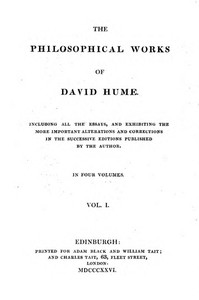
Philosophical Works, v. 1 (of 4) by David Hume
Alright, grab a cup of tea—or something stronger—because we're about to take on a book that'll make your brain do cartwheels. I'm talking about David Hume's Philosophical Works, v. 1 (of 4). Yes, it's from the 1700s. Yes, the man wears a wig in all the portraits. But trust me, this stuff is for our time too.
The Story
So here’s the deal: How do we know what’s real? That’s the main plot. Hume starts off gentle, talking about where our ideas come from—sense experience, memories, imagination—but then he goes nuclear. He argues that the idea of cause and effect? Not something we can prove. Just because the sun rose today doesn't mean we can prove it will tomorrow. Bold for the 1700s, right? He also takes a sledgehammer to the idea that we have a solid, permanent 'self' that lasts over time. Instead, he says we're just bundles of thoughts and sensations stuck together. Don't even get me started on what he says about miracles—hint: quick to dismiss them. But throughout, he writes with zero jargon, like a friend who's been pondering these ideas after a long walk and just needs to tell someone about it.
Why You Should Read It
What I love about this book is that it’s not a dusty, boring theory-fest. Hume includes personal letters and essays alongside philosophy—so you feel like you’re hanging out with a real human being instead of a marble statue of a thinker. The sections touching on human emotions and the way our feelings drive logical thought deepens the reading experience noticeably; they spoke volumes to me about how complicated daily decision-making is. I love parts where he describes the push and pull between reason on one hand and passion on the other. That concept helped immensely with exploring my own more contradictory feelings. But the reason i'd hand a copy to just about everyone is how nicely he invites our doubts—and issues warnings about trusting too assured logical systems.
Final Verdict
Scientist types? Fellow philosophy nuts? The average intelligent reader tired of easy words? You. And news for you—it can be time-travel, and hit the present perfectly even as it sinks you on human truth feeling impossible sometimes but is worth wrestling with just once. Unpolished edition the best point to start history of intellectual toughness makes crucial pick for curious brains.
This work has been identified as being free of known copyright restrictions. It is now common property for all to enjoy.