
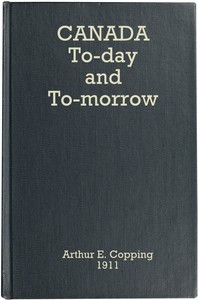
Canada To-day and To-morrow by Arthur E. Copping
Arthur E. Copping’s Canada To-day and To-morrow is a snapshot of a nation on the cusp of change. Published in 1912, it reads like a long, thoughtful letter from a well-traveled friend. Copping didn't just look out the train window; he got off at the stops, talked to people, and tried to feel the pulse of the country.
The Story
There isn't a plot in the traditional sense. Instead, Copping takes us on a journey from the Atlantic to the Pacific. He describes the bustling ports of Halifax, the growing farms of the Prairies, and the raw potential of British Columbia. He interviews premiers, celebrates new immigrants breaking land, and marvels at engineering feats like new railways. The whole book is built on one big question: Where is all this heading? His 'story' is the argument he builds—that Canada is about to step out of Britain's shadow and become a major player on the world stage, fueled by its land, resources, and people.
Why You Should Read It
The magic of this book is in the perspective. Reading it in the 21st century, you have the ultimate spoiler: you know what happened next. This makes his confident predictions incredibly engaging. When he talks about the limitless future of wheat farming, you think of the Dust Bowl. When he gushes about the harmony between new settlers and First Nations, you wince at the history he couldn't see. It’s not dry history; it’s a live recording of a national mood—full of hope, ambition, and a fair bit of blind spot. It makes you reflect on what we’re optimistic about today that might look naive in a hundred years.
Final Verdict
This is a perfect read for history fans who want to go beyond dates and battles to understand the mindset of an era. It’s also great for any Canadian curious about their country’s teenage years, full of big dreams and growing pains. If you enjoy primary sources or the weird thrill of reading old futurism (like predictions about flying cars), you’ll find this fascinating. Just don't expect a modern, critical analysis. Read it as a conversation with a smart, enthusiastic observer from the past. His Canada is long gone, but the energy he captured is still part of the national DNA.
This content is free to share and distribute. Distribute this work to help spread literacy.
Linda Anderson
1 year agoThe analytical framework presented is both innovative and robust.
Jennifer Wilson
9 months agoSolid story.
Kenneth Perez
2 years agoVery helpful, thanks.
Noah Lee
1 year agoA must-have for anyone studying this subject.




Michael Hernandez
8 months agoLooking at the bibliography alone, the transition between theoretical knowledge and practical application is seamless. The price-to-value ratio here is simply unbeatable.