
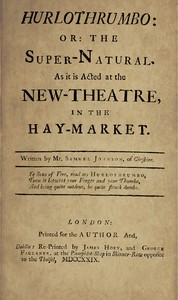
Hurlothrumbo : or, The super-natural by Samuel Johnson
Let's be clear from the start: 'Hurlothrumbo' is not a normal book. Published in 1729, it was a smash hit in its day, though modern readers might scratch their heads. It's written as a play, but the dialogue is so dense and poetic that it reads more like a dramatic poem or a very strange novel.
The Story
The plot revolves around Lord Flame, a nobleman living in a shadowy, supernatural world. He's tormented—but not by typical ghosts. These are spectral beings who engage him in long, winding debates about life's biggest mysteries. They question love, mourn lost time, and ponder what happens after we die. The action (such as it is) moves between a magical castle and various eerie landscapes, populated by characters with names like 'Spirit of Electricity' and a chattering skeleton. It's less about events and more about the emotional and philosophical state of Lord Flame as he navigates this confusing, ghost-filled reality.
Why You Should Read It
I'll be honest, it's a challenging read. The language is extravagant and the logic is dreamlike. But that's also why it's so cool. This isn't a polished 19th-century novel; it's a raw, exuberant burst of imagination from the early 1700s. You get to see what passed for 'weird' back then. Reading it feels like uncovering a literary artifact. You can almost hear the audience gasping at the special effects (the 'skeleton' must have been a riot on stage). It's a window into the passions and fears of a different time, wrapped in pure, unadulterated oddity.
Final Verdict
This book is perfect for literary adventurers and history-of-weirdness fans. If you enjoy authors like Mervyn Peake (*Gormenghast*) or the surreal edges of early Gothic fiction, you'll find its ancestor here. It's not for someone looking for a fast-paced plot or clear answers. But if you want to experience a truly unique, centuries-old piece of writing that boldly does its own bizarre thing, give 'Hurlothrumbo' a try. Just be prepared to embrace the confusion—it's all part of the fun.
This historical work is free of copyright protections. You can copy, modify, and distribute it freely.
Kimberly Anderson
4 months agoI wanted to compare this perspective with traditional views, the author doesn't just scratch the surface but goes into meaningful detail. This exceeded my expectations in almost every way.
Christopher Lee
1 year agoAs a professional in this niche, the argument presented in the middle section is particularly compelling. A refreshing and intellectually stimulating read.
Michael White
5 months agoThe information is current and very relevant to today's needs.
Susan Miller
2 years agoThis digital copy caught my eye due to its reputation, the case studies and practical examples provided add immense value. It cleared up a lot of the confusion I had previously.




Linda Davis
9 months agoFrom a researcher's perspective, the attention to detail regarding the core terminology is flawless. I am looking forward to the author's next publication.