
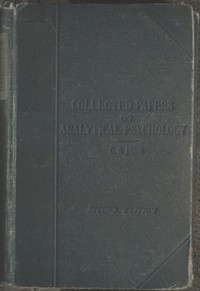
Collected Papers on Analytical Psychology by C. G. Jung
Let's be clear from the start: this isn't a novel with a plot. Collected Papers on Analytical Psychology is more like a journal of discoveries. Think of it as a series of maps, drawn by Carl Jung as he explored uncharted territory—the human psyche. The 'story' is the development of his revolutionary ideas. He starts by breaking from his mentor, Freud, arguing that there's more to us than just personal trauma and sexual drives. From there, he pieces together his theory of a deeper layer of the mind shared by all humanity: the collective unconscious.
The Story
The book collects key lectures and essays where Jung lays the groundwork. He introduces concepts like complexes, archetypes (those universal character templates like the Hero or the Wise Old Man), and the process of individuation—becoming your whole, unique self. He uses case studies, analyzes dreams and fairy tales from around the world, and builds a compelling case. The narrative arc is intellectual: watch a brilliant mind question established dogma, gather evidence from mythology, religion, and his patients' experiences, and construct a new way of understanding who we are.
Why You Should Read It
You should read this not to become an expert, but to feel the spark of a huge idea. Jung's writing here is more accessible than in his later, denser works. Reading him describe the 'shadow' (the parts of ourselves we deny) or the 'anima/animus' (the inner feminine/masculine) feels less like studying and more like someone finally giving names to things you've vaguely felt but couldn't explain. It makes you look at your own dreams, your reactions to stories, even your creative blocks, in a completely new light. It's profoundly empowering.
Final Verdict
This book is perfect for the curious reader who enjoys big ideas, not just light fiction. It's for anyone interested in mythology, storytelling, creativity, or self-discovery. It's also a great starting point for understanding Jung before tackling his heavier books. If you're looking for neat, simple answers, this isn't it. But if you want to explore the messy, fascinating, and mysterious depths of the human experience with one of its greatest guides, this collection is essential reading. Be prepared to go slowly, underline passages, and think a lot.
This masterpiece is free from copyright limitations. Knowledge should be free and accessible.
Christopher Rodriguez
1 year agoUnlike many other resources I've purchased before, the practical checklists included are a great touch for real-world use. It’s a comprehensive resource that doesn't feel bloated.


George Miller
9 months agoIt’s rare to find such a well-structured narrative nowadays, the cross-referencing of different chapters makes it a great study tool. I'll be citing this in my upcoming project.