
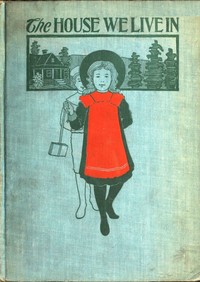
The House We Live In; or, The Making of the Body by Vesta J. Farnsworth
Let's get one thing straight: The House We Live In is not a novel. It doesn't have a plot in the traditional sense, with heroes and villains. Instead, Vesta J. Farnsworth has written a guidebook, but the subject is the most familiar and mysterious place we'll ever know: the human body.
The Story
Farnsworth's core idea is simple but brilliant. She imagines the body as a complex, well-designed house. Each chapter is a room or a system. She walks you through the 'construction,' starting with the bones as the frame and the skin as the outer walls. The digestive system becomes the kitchen and plumbing, carefully preparing fuel and removing waste. The circulatory system is the heating and water pipes, with the heart as the faithful furnace. The brain is the master tenant in the attic, sending messages down the nerves, which she likens to telegraph wires. She explains how we breathe, move, think, and feel, all through this persistent, charming metaphor of home maintenance.
Why You Should Read It
What grabbed me wasn't just the cleverness of the metaphor—it's the historical lens. Reading this in the 21st century is a trip. Farnsworth's explanations are a snapshot of 1910 biology. Some of her comparisons are surprisingly apt and easy to grasp. Others reveal what they didn't know yet, like the full complexity of hormones or the role of DNA. There's no jargon, just earnest, clear language trying to make the incredible machinery of life understandable. It made me appreciate both how much we've learned and how clever past thinkers were with the tools they had. You end up learning a bit about physiology and a lot about the history of science communication.
Final Verdict
This book is a hidden gem for a specific reader. It's perfect for history or science buffs who enjoy seeing how ideas evolve. If you like quirky, analog-heavy explanations of complex topics (think The Way Things Work but for Edwardian-era anatomy), you'll love it. It's also great for anyone interested in early wellness and self-care writing, as Farnsworth emphasizes the owner's duty to maintain their 'house' properly. It's not a modern textbook, so don't read it for current medical advice. Read it for the charm, the clever metaphor, and the fascinating peek into how a person from 1910 understood the miracle of their own beating heart and thinking mind. It's a short, unique, and quietly mind-expanding little book.
This is a copyright-free edition. Distribute this work to help spread literacy.
John Jones
10 months agoLooking at the bibliography alone, the insights into future trends are particularly thought-provoking. Finally, a source that prioritizes accuracy over hype.
Liam White
1 year agoI was skeptical at first, but the storytelling feels authentic and emotionally grounded. I will read more from this author.
Daniel Young
2 years agoRead this on my tablet, looks great.
Emily Walker
4 months agoThe layout is very easy on the eyes.








Emily Davis
10 months agoI was skeptical about the depth of this book at first, but the bibliography and references suggest a high level of research and authority. I am looking forward to the author's next publication.