
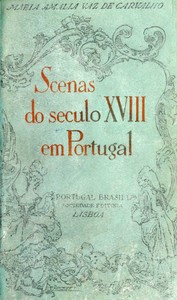
Scenas do século XVIII em Portugal by Maria Amalia Vaz de Carvalho
Forget the dry history textbooks. Maria Amalia Vaz de Carvalho's 'Scenas do século XVIII em Portugal' is something much more intimate. Written in the late 19th century, she looks back a hundred years to paint a picture of Portuguese society not through grand political narratives, but through its daily rhythms, customs, and characters.
The Story
There isn't a single plot with a hero. Instead, the book is a collection of 'scenes'—vivid snapshots of 1700s life. Carvalho explores the rigid class structure, showing how nobles, clergy, and commoners lived in separate worlds. She describes the influence of foreign ideas, the obsession with appearances, and the elaborate social rituals that governed everything. A major focus is the catastrophic 1755 Lisbon earthquake, not just as a geological event, but as a social and psychological shock that shattered the old order. We see how people reacted, how the city rebuilt, and how faith and reason collided in the aftermath.
Why You Should Read It
What makes this book special is Carvalho's voice. She writes with the curiosity of a detective and the warmth of a storyteller. You can tell she's fascinated by people. She points out the absurdities of fashion, the quiet power struggles in conversations, and the small acts of defiance that hinted at bigger changes to come. Reading it, you don't just learn what happened; you get a feel for the mood of the time—the anxieties, the hopes, and the contradictions of a nation caught between its past and an uncertain future. It turns history from a subject into an experience.
Final Verdict
This is a perfect pick for anyone who loves historical nonfiction that feels personal. If you enjoy books that explore social history, manners, and the texture of everyday life in another era, you'll be hooked. It's also a great read for fans of Portuguese culture who want to understand the roots of modern Portugal. Be prepared for a book that's more about observation and atmosphere than fast-paced action. Think of it as a long, fascinating coffee chat with a very clever friend who has done all the research for you.
You are viewing a work that belongs to the global public domain. Enjoy reading and sharing without restrictions.
William Williams
1 year agoIt’s rare to find such a well-structured narrative nowadays, the footnotes provide extra depth for those who want to dig deeper. I'll be recommending this to my students and colleagues alike.
Barbara Wilson
1 year agoIt’s rare to find such a well-structured narrative nowadays, the wealth of information provided exceeds the average market standard. Highly recommended for those seeking credible information.
Susan Williams
1 year agoThe layout is perfect for tablet and e-reader devices.
George Garcia
9 months agoIt’s refreshing to see such a high standard of digital publishing.







Susan Lopez
2 months agoHaving followed this topic for years, I can say that the emphasis on ethics and sustainability within the topic is commendable. An excellent example of how quality digital books should be formatted.