
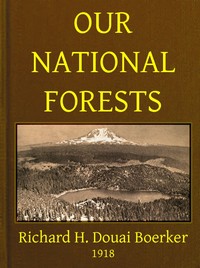
Our national forests : a short popular account of the work of the United…
Published in 1919, Richard Boerker's Our National Forests is a snapshot of a critical moment. It was written when the idea of protecting public land was still new and fiercely debated. Boerker wasn't just an observer; he was a Forest Service man who helped build the system from the ground up. His book is part field report, part passionate argument, and part how-to manual for a nation just learning what it means to be a steward of its own land.
The Story
There isn't a traditional plot with characters, but there is a clear narrative arc. Boerker lays out the problem: America's forests were being logged, burned, and grazed into ruin at an alarming rate. He then walks you through the birth of the U.S. Forest Service and its mission. The 'story' is the day-to-day work—fighting wildfires with shovels and backfires, negotiating with ranchers and loggers, planning new roads and trails, and trying to balance use with protection. He explains the science of forestry in plain language, showing why keeping trees on a hillside prevents floods and saves farms downstream. It's the origin story of the green spaces we now take for granted.
Why You Should Read It
What makes this book special is the voice. Boerker's passion is obvious. He's not a bureaucrat in Washington; he's a guy who has seen the scars on the land and believes deeply in fixing them. Reading his straightforward explanations about soil erosion or sustainable logging, you feel the urgency of that early 20th-century conservation movement. It connects the dots between a policy decision made over a century ago and the shady trail you walked on last weekend. It gives names and faces to the often-invisible work of conservation. After reading it, you'll never look at a national forest sign the same way again.
Final Verdict
This is a perfect, quick read for anyone who loves the outdoors and is curious about history. It's for the hiker, camper, or road-tripper who wants to know why that vast stretch of public land exists. While it's a historical document, its core questions about balancing use and preservation are still being argued today. It's not a modern narrative nonfiction page-turner, but its earnest, firsthand account has a power all its own. Pick it up for a dose of perspective before your next forest adventure.
This masterpiece is free from copyright limitations. It serves as a testament to our shared literary heritage.
Melissa Thomas
3 months agoEnjoyed every page.
Thomas Young
1 year agoHonestly, the narrative structure is incredibly compelling. One of the best books I've read this year.

Ava Lewis
1 year agoJust what I was looking for.