COP31 climate talks collapse as EU and others reject deal
UN climate talks collapsed on Sunday as the European Union and others rejected a final draft deal put forward by COP31 presidents Turkiye and Australia, saying it was too weak to advance the fight against global warming. The failed talks reflect world governments’ struggle this year to muster ambitious action to address the worsening consequences of climate
 Illustrative image
COP31 climate talks collapse as EU and others reject deal
Email Story
UN climate talks collapsed on Sunday as the European Union and others rejected a final draft deal put forward by COP31 presidents Turkiye and Australia, saying it was too weak to advance the fight against global warming.
The failed talks reflect world governments’ struggle this year to muster ambitious action to address the worsening consequences of climate change, as wars, economic pressures and other crises compete for their attention.
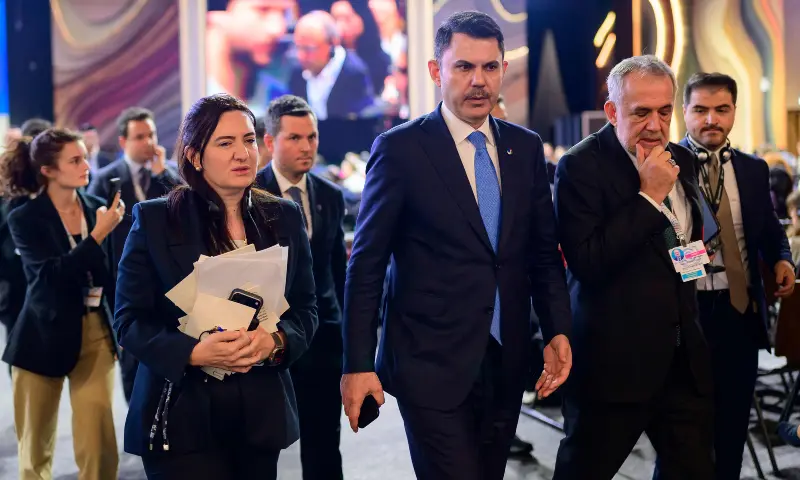
After more than two weeks of negotiations that spilled two days into overtime — making it the longest COP on record — Turkiye’s conference president Murat Kurum said at the closing plenary that he could see there was no agreement and confirmed he would not advance any new text.
“There is nothing to do, we did all that we could,” he said. “There will be no new text from now on.”
He later left the stage in the midst of speeches being delivered by country representatives.
UN Secretary General Antonio Guterres said he was “deeply disappointed” that the climate talks ended without consensus.
“I share the very profound frustration of all those who expected governments to rise to the moment the climate crisis demands,” Guterres said in a statement.
“Those who profit from the destruction of our planet must never dictate the terms of the fight to save it. Fossil fuels are driving the climate crisis. ”
Australia’s COP31 President of Negotiations, Chris Bowen, called the outcome “very disappointing” and said disagreements over fuels and climate finance were the dealbreakers.
Earlier, multiple countries and negotiating blocs said they could not accept the version of the text put before them.
“It is clear that there are parties in this hall who oppose this text. We recognise that there is no consensus on this document. Therefore, these decisions have not been adopted,” Kurum said.
The last time UN climate talks failed to end with a deal adopted by all was in Copenhagen in 2009.
The collapse this time is against the backdrop of competing crises, including wars and public outcry over the cost of living, that have overshadowed the problems caused by a warming climate.
Ireland’s environment minister Darragh O’Brien said the European Union could not support the proposed deal, in part because it made no mention of the fossil fuels that scientists say are driving global warming.
“It is unconscionable that we would have a climate act that makes no reference to fossil fuel, no reference to transitioning away from fossil fuels,” he said.
Panama also said it could not support the current text because it fails to meet the scale of the climate crisis.
This year’s COP is the first since the UN’s environmental body in October that confirmed the rise in global temperature was set to exceed 1.5 degrees Celsius, a threshold countries agreed at Paris climate talks over a decade ago to try not to exceed, and beyond which extreme weather impacts intensify.
Belgium’s Climate Minister Jean-Luc Crucke said the failure of the deal was a difficult outcome, but appropriate.
“It’s not the end of multilateralism, but there has to be courage to say no,” he said.
While a blow to efforts to ratchet up international action, the failure to agree a political declaration in Antalya does not erase the obligations agreed by previous UN conferences or remove the technical and legal frameworks governing multilateral action against climate change.
Pressure from Saudi Arabia and other oil producers
The proposed deal had acknowledged the overshoot, but called for faster development of carbon-removal technologies to eventually reverse it.
Observers at the venue said Saudi Arabia and other big oil-producing nations had pushed hard in negotiations for keeping explicit mention of fossil fuels out of the text, and carbon removal technologies in.
While scientists say removing carbon from the atmosphere when paired with steep emissions cuts is vital to avoiding the worst impacts of climate change, critics of the deal said they worried the carbon removal language would be used as a licence to keep pumping oil.
A representative for the Saudi delegation told the summit he was surprised at the resistance to technology.
“If indeed the climate challenge, as some have mentioned today, is so important, it makes no sense that solutions, concrete solutions… will be taken off the table,” he said.
Developing countries had also criticised the deal for not providing sufficient new climate finance to help them adapt to a warming planet. The deal had called for a tripling of such finance, but did not specify from what baseline.
The failed deal had also included a goal put forward by Turkiye to expand electricity’s share of total final world energy consumption to 35 per cent by 2035, from around 23pc now.
Proponents of that pledge said it could cut greenhouse gas emissions by speeding the transition away from fuel-powered cars, furnaces, and other equipment. But critics said it could force more costs onto poor nations without providing a clear path away from fossil fuels.
The COP process is the main vehicle through which countries coordinate their efforts to curb global warming. Its annual summit provides an opportunity for nations to signal they are willing to work together to find solutions and help finance the problems rising temperatures cause.
Read more
PM touts ‘citizen-led solar revolution’ at COP31
COP31 arrives
COP31 draft seeks faster shift away from fossil fuels
Most Popular
Afghan tradition keeps grapes fresh for winter treat
Presidential ordinance withdraws most privileges of KP MPAs, including protection against preventive detention
Rizwan, Shan, Saim among notable omissions as PCB awards contracts to 38 players
Before we design new provinces
Two Pakistani schools earn global recognition at World’s Best School Prizes 2026
In New Delhi, Musadik hails opportunity for multilateral dialogue
Bilawal wants PM Shehbaz to become first premier to complete 5-year term
At SCO moot in India, Musadik Malik declares climate change ‘enemy’ of civilisations
Reining it in
Latest Stories
Rosenior warns Paris FC to focus as they climb second in Ligue 1
Atalanta grab dramatic draw with Inter Milan in Serie A
Barcelona retain advantage atop La Liga after comeback win over Villarreal
Pochettino backs Manchester United players after Liverpool thrashing, rejects relegation talk
Carlos Alcaraz downs Alexander Zverev to win ATP Finals for first time
Washington governor calls ICE 'out of control' after Seattle airport arrests
Opinion
Legislative scrutiny
Reforming Karachi’s governance
Future wars
Whose trauma?
Before we design new provinces
Editorial
Fresh elections?
Wage enforcement
Unlocking history
Reining it in
Rohingya genocide
Theatre control
Why Lahore’s Smog Keeps Getting Worse
Pakistan’s Test Cricket Future Under Mike Hesson
How WhatsApp Changed Brazil’s Election
AI Boom Is Facing a Reality Check
Is America’s Global Influence Declining? Dean Baker on Trump, China and Pakistan
Pakistan vs Sri Lanka: New Stars Emerge in Rawalpindi Test Draw
Jackdaw Gas Field Controversy: Are Rich Countries Failing the Global South?
Previous story
Pakistan rises 17 places in UN e-governance ranking
Next story
Afghan tradition keeps grapes fresh for winter treat
Related stories
 Illustrative imageIllustrative imageIllustrative imageIllustrative imageIllustrative imageIllustrative image